

Hair and skin
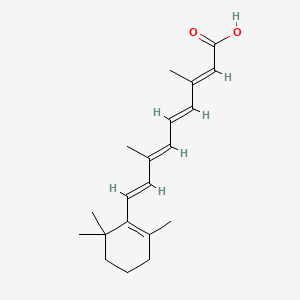
Tretinoin
A retinoid with clinical acne and photoaging evidence; topical treatment must be distinguished from systemic retinoid medicines.
Randomized human acne and photodamage trials
Also known as: all-trans-retinoic acid · ATRA · Retin-A · Altreno
Practical use
Applying the explained evidence
- Where it fits
- A retinoid with clinical acne and photoaging evidence; topical treatment must be distinguished from systemic retinoid medicines.
- Put the information into practice
- A lower acne-lesion count, a clear-skin endpoint and a biopsy marker for collagen are distinct results. None can be substituted for another or advertised as guaranteed skin renewal.
- Define the change you want to assess
- Record the specific concern and its time course. When evaluating a claim, look for a matching diagnosis, a defined measurement and an appropriate comparison rather than relying on a before-and-after photograph alone.
- Keep this limit in view
- The cited trials concern topical tretinoin. Different retinoids, routes and formulations need their own evidence and safety assessment.
Overview
Tretinoin is all-trans-retinoic acid. It binds retinoic-acid receptors and affects epithelial differentiation. In acne, evidence supports reduced follicular-cell cohesiveness and microcomedone formation, although the complete clinical mechanism is not established. This entry focuses on topical dermatologic evidence.
Risks and limitations
Burning, peeling, redness and dryness can occur. Sun protection matters, and eczematous or sunburned skin can be more vulnerable. Some formulations have specific allergens, including fish-derived protein in Altreno. Pregnancy safety is not established sufficiently to justify self-treatment; topical and oral exposures differ.
How to read this
A lower acne-lesion count, a clear-skin endpoint and a biopsy marker for collagen are distinct results. None can be substituted for another or advertised as guaranteed skin renewal.
Research explained
Two acne trials: 12-week lotion outcomes
Who was studied
1,640 participants aged 9 to 58 with moderate-to-severe acne in two randomized, double-blind vehicle-controlled trials.
- Tretinoin: inflammatory lesion reduction
- 52 percent
- Tretinoin: noninflammatory lesion reduction
- 46 percent
What was found
In the pooled publication, treated participants had average reductions of 52% in inflammatory lesions and 46% in noninflammatory lesions. Treatment success was 18%; comparisons with vehicle were statistically significant.
What it cannot establish
The pooled active-group percentages are not placebo-adjusted improvements. Success required both a two-grade improvement and clear/almost-clear skin. Controlled-study tolerability may differ from practice.
Read the original studyPhotodamage: two years of observation
Who was studied
204 people with moderate-to-severe facial photodamage randomized to tretinoin emollient cream or vehicle, followed for up to two years.
What was found
Clinical measures of wrinkles, uneven pigmentation and overall photodamage improved more with tretinoin. A procollagen-synthesis marker increased at month 12 in the sampled centers (P=0.0074).
What it cannot establish
The abstract does not provide an absolute wrinkle-improvement percentage. The biopsy marker is not a direct measurement of visible rejuvenation, and this was a different formulation and condition from the acne trials.
Read the original studyLesion counts and clear skin tell different stories
People can have fewer lesions without reaching clear/almost-clear status. The pooled 18% success figure should remain visible alongside the larger average percentage reductions.
Supporting sourceDo not invent a wrinkle-reversal percentage
The two-year paper reports significant improvements, but the abstract does not quantify a percentage reversal of aging. A P value does not measure how dramatic a visible change was.
Supporting sourceIrritation is not proof of a better response
The label describes local irritation as an adverse effect. More burning or peeling should not be treated as a target or evidence of greater benefit.
Supporting sourceFormulation and indication matter
Altreno’s acne indication begins at age nine. Its trial cannot establish identical efficacy, absorption or tolerability for every tretinoin cream, gel or combined product.
Supporting sourceA skin study is not a whole-body anti-aging study
Clinical improvement in photodamaged facial skin does not establish longer lifespan, systemic rejuvenation or prevention of skin cancer.
Supporting sourceClaims versus findings
Incorrect
Topical tretinoin results can be treated as oral isotretinoin results.
The cited trials concern topical tretinoin. Different retinoids, routes and formulations need their own evidence and safety assessment.
Check the evidenceCommon questions
Does the collagen finding tell us how many years younger someone will look?
No. It is a tissue marker from a clinical study, not a calibrated measure of perceived age.
SourceSources
Two acne trials: 12-week lotion outcomes
Photodamage: two years of observation
Sources checked 2026-09-29.
General education; not a personal treatment plan.