

Hair and skin
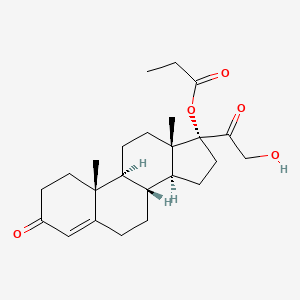
Clascoterone
A topical androgen-receptor inhibitor approved for acne, with measured but incomplete response rates and possible systemic effects.
Two phase 3 acne trials; uncontrolled extension and maximal-use safety data
Also known as: Winlevi · CB-03-01 · cortexolone 17α-propionate
Practical use
Applying the explained evidence
- Where it fits
- A topical androgen-receptor inhibitor approved for acne, with measured but incomplete response rates and possible systemic effects.
- Put the information into practice
- Facial acne, scalp hair loss and systemic androgen blockade are different questions. Results from the approved acne formulation cannot establish equivalent effects for another formulation or indication.
- Define the change you want to assess
- Record the specific concern and its time course. When evaluating a claim, look for a matching diagnosis, a defined measurement and an appropriate comparison rather than relying on a before-and-after photograph alone.
- Keep this limit in view
- The label describes reversible HPA-axis suppression in maximal-use testing.
Two pivotal trials: clear or almost-clear acne
Long-term extension: improvement with weaker causal certainty
Overview
Clascoterone inhibits androgen receptors. Winlevi is a US-approved topical acne medicine for people aged at least 12. The label states that its exact acne-treatment mechanism remains unknown. Receptor activity alone does not establish the size of a clinical benefit.
Risks and limitations
Local redness, dryness, itching or burning may occur. Absorption can increase with large treated areas, prolonged use or occlusion. Hypothalamic-pituitary-adrenal suppression has been observed; topical delivery does not mean systemic effects are impossible.
How to read this
Facial acne, scalp hair loss and systemic androgen blockade are different questions. Results from the approved acne formulation cannot establish equivalent effects for another formulation or indication.
Research explained
Two pivotal trials: clear or almost-clear acne
Who was studied
1,440 participants aged at least nine with moderate or severe facial acne; two blinded, vehicle-controlled 12-week trials.
- Trial 1: clascoterone success
- 18.4 percent
- Trial 1: vehicle success
- 9 percent
- Trial 2: clascoterone success
- 20.3 percent
- Trial 2: vehicle success
- 6.5 percent
What was found
Treatment success was 18.4% versus 9.0% in one trial and 20.3% versus 6.5% in the other. Success required clear/almost-clear skin and an improvement of at least two severity grades.
What it cannot establish
Most treated participants did not reach that strict endpoint. A lower lesion count is a separate outcome. The trial’s minimum age is not the approved US age cutoff.
Read the original studyLong-term extension: improvement with weaker causal certainty
Who was studied
Integrated analysis of participants aged at least 12 from the pivotal studies; 600 entered the extension and 343 completed it. All extension participants received clascoterone.
What was found
Reported facial treatment success reached 30.2% after 12 months; truncal success was 31.7% after nine months.
What it cannot establish
No concurrent vehicle control remained. Extension missing data were not imputed, and attrition was substantial. These percentages are not proof of the same controlled treatment effect persisting or increasing.
Read the original studyThe benefit is a difference from vehicle
The original trials’ success-rate advantages were 9.4 and 13.8 percentage points. Those numbers describe additional participants meeting a strict endpoint, not percentage of acne removed.
Supporting sourceReceptor blockade does not prove total local protection
The studies measured acne lesions and clinical scores. They did not establish prevention of every skin effect associated with high androgen exposure.
Supporting sourceWhat the adrenal finding actually showed
In a small maximal-use study, laboratory HPA suppression occurred in 1/20 adults and 2/22 adolescents. All recovered by four weeks after stopping. These small-study fractions should not be presented as routine-use incidence.
Supporting sourceLonger observation and stronger evidence are not the same
The extension offers useful follow-up, but everyone received treatment and many did not complete it. A longer uncontrolled result does not replace a randomized comparison.
Supporting sourceAcne evidence does not establish hair regrowth
The cited studies assessed facial and truncal acne. They cannot support a numerical scalp-hair benefit, interchangeability with hair-loss formulations or a systemic hormone claim.
Supporting sourceClaims versus findings
Incorrect
Because it is topical, clascoterone cannot affect adrenal function.
The label describes reversible HPA-axis suppression in maximal-use testing.
Check the evidenceCommon questions
Does a 20% success rate mean an 80% reduction in acne?
No. It is the proportion meeting the clear/almost-clear endpoint. Lesion reductions were measured separately.
SourceSources
Two pivotal trials: clear or almost-clear acne
Long-term extension: improvement with weaker causal certainty
Sources checked 2026-09-29.
General education; not a personal treatment plan.