

Hormone medicines
Tamoxifen
An estrogen-receptor-active medicine with breast-cancer uses and potentially serious clotting risks.
Established medical uses
Also known as: Nolvadex · Soltamox
Practical use
Applying the explained evidence
- Where it fits
- An estrogen-receptor-active medicine with breast-cancer uses and potentially serious clotting risks.
- Put the information into practice
- Benefits and risks are assessed against the condition being treated. A legitimate oncology use does not make tamoxifen a routine, risk-free add-on to nonmedical androgen use.
- Diagnosis before a number
- Write down the symptoms, the reason a test was ordered, and the medicines already used. An isolated hormone result is a question to interpret, not a stand-alone reason to add another medicine.
- Keep this limit in view
- That is about 21 fewer cases per 1,000 over this follow-up, not a 49-percentage-point absolute reduction. It concerns breast-cancer prevention in this selected population, not gynecomastia outcomes or recovery after androgen use.
Overview
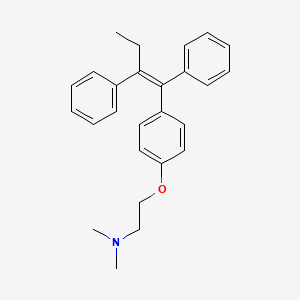
Tamoxifen blocks estrogen activity in breast tissue. It is used to treat certain breast cancers in men and women and to reduce risk in selected women. Receptor effects are different from preventing estrogen production.
Risks and limitations
Important risks include blood clots and stroke. Uterine cancer is a relevant concern for people with a uterus. Medication interactions and prior clotting history matter. Sudden chest pain, breathlessness or stroke-like symptoms require urgent medical care.
How to read this
Benefits and risks are assessed against the condition being treated. A legitimate oncology use does not make tamoxifen a routine, risk-free add-on to nonmedical androgen use.
Research explained
P-1: cancer prevention in a selected high-risk population
Who was studied
13,388 women at elevated breast-cancer risk; randomized tamoxifen-versus-placebo trial.
What was found
Cumulative invasive breast-cancer incidence through 69 months was 22.0 versus 43.4 per 1,000 women, a reported 49% relative reduction.
What it cannot establish
That is about 21 fewer cases per 1,000 over this follow-up, not a 49-percentage-point absolute reduction. It concerns breast-cancer prevention in this selected population, not gynecomastia outcomes or recovery after androgen use.
Read the original studyReceptor activity, metabolism and persistence
Tamoxifen competes with estrogen at receptors in breast tissue. Its terminal plasma half-life is approximately five to seven days; the N-desmethyl metabolite persists longer, with a reported half-life near 14 days. CYP2D6 contributes to formation of active metabolites, including endoxifen.
A concentration or half-life value alone does not capture receptor effects, active metabolites, or individual metabolic differences. The label notes that CYP2D6 inhibitors reduce endoxifen concentrations, while the clinical significance is not fully established.
Supporting sourceSources
P-1: cancer prevention in a selected high-risk population
Receptor activity, metabolism and persistence
Sources checked 2026-09-28.
General education; not a personal treatment plan.