

Nootropics
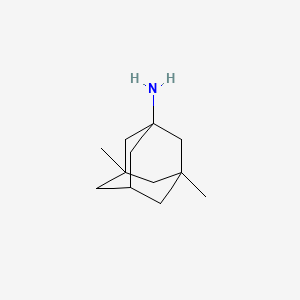
Memantine
An NMDA-receptor antagonist for moderate-to-severe Alzheimer dementia, with evidence of less deterioration on selected measures.
Randomized moderate-to-severe Alzheimer trial; analysis-dependent global result; checked 2026-10-01
Also known as: Namenda
Practical use
Clinical purpose, evidence and review questions
- Specify the baseline
- Keep dated function, cognition and caregiver observations so change has a reference point.
- Record new symptoms
- Note constipation, dizziness, confusion and falls together with potential benefit.
- Bring the whole medication list
- Include renal history and products that may affect urine acidity or NMDA signaling.
Overview
Memantine modulates NMDA-receptor signaling. US labeling concerns moderate-to-severe dementia of the Alzheimer type. Its role is assessed using cognition, function and caregiver observations; a mechanism involving glutamate is not proof of general neuroprotection or healthy-person enhancement.
Risks and limitations
Dizziness, headache, confusion and constipation are common. Kidney impairment and conditions or medicines that make urine more alkaline can raise exposure. Other NMDA-active medicines also need review. New confusion or falls should not automatically be attributed to dementia progression.
How to read this
How missing follow-up data are handled can change a trial’s apparent conclusion. Read the analysis method as well as the headline, especially when some participants discontinue treatment.
Research explained
Twenty-eight-week placebo comparison
Who was studied
252 people with moderate-to-severe Alzheimer disease randomized at 32 US centers; mean age 76. Only 181 completed the 28-week study.
What was found
Daily-function and cognition measures favored memantine. The global clinician/caregiver measure gave P=.06 when the last observation was carried forward and P=.03 when only observed cases were analyzed.
What it cannot establish
Not every primary analysis reached conventional significance. Attrition and the handling of missing data matter; less decline does not establish reversal of Alzheimer disease.
Read the original studyLess decline can be the benefit
A patient may worsen more slowly than a comparison group while still declining from baseline. That differs from returning to normal function.
Supporting sourceClearance affects the clinical interpretation
Renal function and urine alkalinization can change memantine exposure. A medication review should include relevant kidney history and nonprescription products.
Supporting sourceClaims versus findings
Incorrect
Every primary result in the pivotal study was statistically significant.
The global outcome depended on the missing-data analysis, while other measured outcomes favored treatment.
Check the evidenceCommon questions
Does NMDA blockade itself prove brain protection?
No. A receptor mechanism and a clinical outcome are different kinds of evidence.
SourceSources
Twenty-eight-week placebo comparison
US prescribing information; checked October 1, 2026
Sources checked 2026-10-01.
General education; not a personal treatment plan.