

Hormone medicines
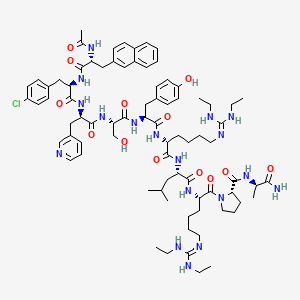
Ganirelix
A GnRH antagonist that prevents a premature LH surge during ovarian stimulation, with evidence from complete fertility-treatment pathways.
Randomized ovarian-stimulation comparison; pathway-specific findings; checked 2026-10-01
Also known as: Orgalutran · Antagon
Practical use
Clinical purpose, evidence and review questions
- Identify each medicine’s job
- Ask which agent develops follicles and which prevents a premature surge.
- Keep the full plan available
- Bring the product list, monitoring schedule and prior allergy history.
- Compare outcomes fairly
- Use the same denominator and distinguish pregnancy from live birth when comparing protocols.
Overview
Ganirelix directly blocks pituitary GnRH receptors. US labeling concerns suppression of premature LH surges in women undergoing controlled ovarian hyperstimulation. Its immediate receptor blockade differs from the initial stimulation followed by suppression seen with GnRH agonists.
Risks and limitations
Hypersensitivity, including anaphylaxis, can occur with the first exposure. Some products have latex-related packaging concerns. Pregnancy is a contraindication. Ovarian hyperstimulation risk belongs to the complete fertility pathway; severe pain, swelling or breathlessness should be reported promptly.
How to read this
Shorter treatment exposure may reduce burden, but a shorter pathway is not by itself proof of higher pregnancy or live-birth rates.
Research explained
European Orgalutran comparison
Who was studied
730 women randomized 2:1 in an open-label IVF/ICSI trial comparing ganirelix with a buserelin strategy; both groups received recombinant FSH.
What was found
Median GnRH-analogue exposure was 5 versus 26 days. LH rises occurred in 2.8% versus 1.3%; ongoing pregnancy per attempt was 20.3% versus 25.7%. OHSS was reported in 2.4% versus 5.9%.
What it cannot establish
These are outcomes of complete strategies in an older open-label trial. Different numerical findings should not be compressed into a claim that ganirelix improved every fertility outcome.
Read the original studyWhy suppression can assist conception
The antagonist helps prevent ovulation before the planned fertility procedure. It is a timing component within supervised ovarian stimulation.
Supporting sourceConvenience and pregnancy remain separate
A much shorter exposure period coexisted with a numerically lower ongoing-pregnancy rate in this trial. Both observations belong in an honest summary.
Supporting sourceClaims versus findings
Incorrect
Fewer treatment days prove a higher pregnancy rate.
The trial’s convenience measure and reproductive outcomes did not point uniformly in that direction.
Check the evidenceCommon questions
Is this a treatment to raise testosterone in men?
That is not the labeled indication or the population in the cited trial.
SourceSources
European Orgalutran comparison
US prescribing information; checked October 1, 2026
Sources checked 2026-10-01.
General education; not a personal treatment plan.