

Hormone medicines
Leuprolide
A GnRH agonist that ultimately suppresses sex-hormone production; the early hormone rise and the formulation both matter.
Established cancer-treatment evidence; formulation and endpoint limits
Also known as: Leuprorelin · Lupron Depot
Practical use
Clinical context and evidence interpretation
- Record the actual product and purpose
- Bring the exact formulation name and diagnosis to any medication review. A generic drug name alone may omit the release system.
- Ask what counts as treatment success
- Separate testosterone suppression, symptom control, tumor response and survival when reading an oncology claim.
- Track changes that affect daily life
- Record hot flashes, fatigue, function and relevant lab trends for the treating team so disease response and treatment burden are assessed together.
Overview
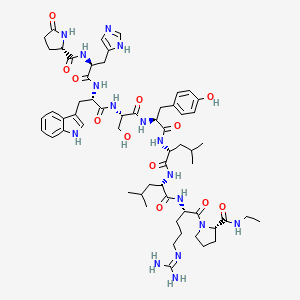
Leuprolide, also called leuprorelin, stimulates GnRH receptors initially; sustained exposure suppresses gonadotropin signaling. This guide focuses on advanced-prostate-cancer treatment with US Lupron Depot. Other leuprolide products and indications require their own label and population-specific interpretation.
Risks and limitations
Early testosterone rise can worsen cancer symptoms, including urinary obstruction or spinal cord compression. Other concerns include metabolic changes, cardiovascular events, QT prolongation, seizures and severe skin reactions. New leg weakness, loss of bladder control or severe worsening back pain needs urgent assessment.
How to read this
The intended outcome in prostate-cancer care is androgen deprivation. This explains why a drug described as a hormone agonist can lower testosterone over time. It is not evidence for restoring natural testosterone after nonmedical androgen use.
Research explained
Historical randomized comparison with diethylstilbestrol
Who was studied
199 men with previously untreated metastatic prostate cancer: 98 assigned leuprolide and 101 diethylstilbestrol, with disease response and one-year survival assessed.
What was found
The reported response categories, including stable disease, totaled 86% with leuprolide and 85% with the comparator. One-year survival was 87% versus 78%; that difference was not statistically significant (P=.17). Hot flashes were more frequent with leuprolide.
What it cannot establish
This 1984 trial used an older formulation and comparator. Its response definition includes stable disease and should not be mistaken for tumor disappearance. It does not compare the full range of modern cancer-treatment combinations.
Read the original studyInitial stimulation and later suppression are different phases
An early testosterone rise can occur before suppression. The label therefore highlights monitoring for worsening symptoms at the beginning of prostate-cancer treatment.
Supporting sourceA depot name does not make products interchangeable
Lupron Depot preparations have different release characteristics. A claim about a particular formulation must retain that context rather than being generalized to every leuprolide product.
Supporting sourceClaims versus findings
Incorrect
An 86% response rate means 86% of tumors disappeared.
The historical total included 48% with stable disease, 37% partial responses and 1% complete responses.
Check the evidenceCommon questions
Did this study prove a survival advantage over the comparator?
No. The numerical one-year survival difference did not meet statistical significance.
SourceSources
Historical randomized comparison with diethylstilbestrol
US prescribing information; checked October 1, 2026
Sources checked 2026-10-01.
General education; not a personal treatment plan.