

Peptides
Vilon
A two-amino-acid peptide studied in cell-aging and inflammatory-signaling experiments, without demonstrated clinical anti-aging benefit in these sources.
Human-derived cell research; no treated-patient outcomes
Also known as: Lys-Glu · KE peptide
Practical use
Reviewed practical notes
- Check the identity
- Vilon means the Lys-Glu dipeptide here; similarly spelled software names are unrelated.
- Keep cells separate from patients
- Neither cited paper reports treated-patient outcomes.
- Avoid longevity extrapolation
- Cell markers do not establish slower aging or longer life.
Overview
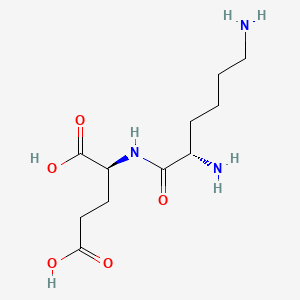
Vilon is the dipeptide Lys-Glu, also called KE. Researchers have investigated gene-expression changes during cell aging and effects on inflammatory signaling. These experiments can generate hypotheses about biology; they cannot demonstrate that administering the peptide improves health or slows aging in people.
Risks and limitations
The reviewed cell studies do not establish human safety, interactions or long-term effects. Changes in proliferation or inflammatory markers can have different consequences across tissues and diseases. A favorable laboratory marker is not a whole-body safety assessment.
How to read this
Both papers use material of human origin, but neither is a clinical trial in people receiving Vilon. One uses a leukemia-derived cell line. The word “human” in indexing or a study description must not obscure that distinction.
Research explained
Gene expression during stem-cell aging
Who was studied
Human mesenchymal stem cells studied in culture across cellular aging conditions.
What was found
Vilon altered SIRT1, PARP1 and PARP2 expression and protein measurements. The paper also used molecular modeling to propose DNA interactions.
What it cannot establish
Gene and protein changes are surrogate laboratory outcomes. Modeled binding is not demonstrated binding in a treated person, and no clinical longevity endpoint was measured.
Read the original studyMonocyte and macrophage signaling experiment
Who was studied
THP-1 leukemia-derived cells studied with five separate peptides, including Vilon.
What was found
Researchers reported changes in proliferative signaling and reductions in selected inflammatory responses under specific cell-culture conditions.
What it cannot establish
The paper includes different peptides and cell states. A result specific to another peptide cannot be attributed to Vilon, and none of the experiments establishes prevention of infection or inflammatory disease in people.
Read the original studyAn endogenous pathway is not an administered treatment result
SIRT1 or PARP biology may be relevant to aging research. Showing a change in those pathways after cell exposure remains several steps away from demonstrating a useful intervention for a patient.
Supporting sourceSources
2023 Vilon stem-cell experiment
2022 multi-peptide cell-signaling experiment
Sources checked 2026-10-01.
General education; not a personal treatment plan.