

Peptides
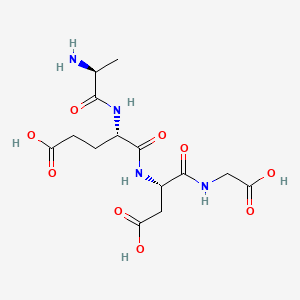
Epitalon
A short peptide investigated in telomere biology; cell findings do not establish slower aging or longer life in people.
Human-derived cell experiments, not human longevity trials
Also known as: Epithalon
Practical use
Reviewed practical notes
- Identify the model
- Human-derived cells are not a human clinical trial.
- Demand a clinical outcome
- Telomerase activity is different from disability, disease incidence or survival.
- Avoid a universal aging claim
- These sources do not establish that taking the peptide slows aging.
Overview
Epitalon, also spelled Epithalon, is a research peptide studied for effects on telomerase and telomere maintenance. Telomeres are chromosome-end structures. Changing a telomere-related marker in a dish is a mechanistic observation, not a measurement of a person’s healthspan or lifespan.
Risks and limitations
The experiments do not establish clinical safety. A newer study also found telomere elongation in breast-cancer cell lines through an alternative maintenance pathway. That does not prove Epitalon causes cancer in people, but it makes a blanket claim that telomere lengthening is beneficial especially inappropriate.
How to read this
The phrase “human cells” describes the origin of laboratory material. It does not mean volunteers received the peptide or that researchers measured fewer diseases, improved function or longer survival in humans.
Research explained
Telomerase in cultured fibroblasts
Who was studied
Human fetal fibroblasts grown in culture.
What was found
Researchers reported induction of telomerase activity and telomere elongation after Epithalon exposure.
What it cannot establish
No patients were treated. The result cannot establish an anti-aging benefit, an effective clinical intervention or long-term safety.
Read the original studyNormal and cancer-cell telomere pathways
Who was studied
Normal epithelial and fibroblast cultures and two human breast-cancer cell lines.
What was found
The study reported telomerase-related changes in normal cells and alternative telomere-lengthening activity in cancer cells.
What it cannot establish
Cell-line responses depend on experimental conditions. They neither prove human longevity benefit nor quantify cancer risk in people.
Read the original studyLonger is not automatically better
Telomere biology supports cell maintenance in different contexts, including abnormal cells. A marker that moves in the anticipated direction still needs clinical evidence linking it to better health and acceptable harms.
Supporting sourceThe figure correction belongs with the study
A published correction replaced Figures 1, 2 and 3 in the newer cell study. This guide retains that notice and does not reproduce numerical figure estimates.
Supporting sourceSources
2025 normal and cancer-cell experiment
Sources checked 2026-10-01.
General education; not a personal treatment plan.