

Peptides
TB-500
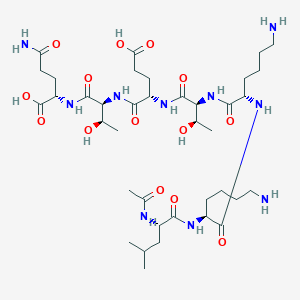
An acetylated thymosin-beta-4 fragment in the cited analytical studies; most repair claims exceed its direct human evidence.
Experimental / study-specific evidence
Also known as: Ac-LKKTETQ
Practical use
Applying the explained evidence
- Where it fits
- An acetylated thymosin-beta-4 fragment in the cited analytical studies; most repair claims exceed its direct human evidence.
- Put the information into practice
- Keep detection, metabolism and biological activity separate. Finding a metabolite does not establish benefit, and an in-vitro wound assay is not a healed human tendon.
- Check what was actually tested
- Match the exact molecule, formulation and study setting to the claim. A result for a related peptide, a cell model or an animal model does not establish the same result for a marketed human-use product.
- Keep this limit in view
- This was not a human clinical trial or an efficacy test. Detection capability is not a therapeutic effect.
Overview
The 2012 analytical study identified TB-500 as N-acetylated LKKTETQ, a seven-residue segment related to thymosin beta-4. A label using TB-500 does not itself confirm which molecular material is present.
Risks and limitations
The studies below are analytical, animal or cell experiments. They do not establish human adverse-event rates, long-term safety or efficacy for tendon injuries.
How to read this
Keep detection, metabolism and biological activity separate. Finding a metabolite does not establish benefit, and an in-vitro wound assay is not a healed human tendon.
Research explained
Chemical identity and detection in horses
Who was studied
Analytical work plus post-administration equine plasma and urine samples.
What was found
Researchers identified the acetylated fragment and its metabolites. The experiment established an analytical method for this material.
What it cannot establish
This was not a human clinical trial or an efficacy test. Detection capability is not a therapeutic effect.
Read the original studyParent peptide versus metabolite in a wound assay
Who was studied
Human serum and enzyme systems, rats, and fibroblast experiments; published in 2024.
What was found
Only the Ac-LKKTE metabolite showed significant wound-assay activity versus control. The parent and tested metabolites showed no cytotoxicity in that assay.
What it cannot establish
No cytotoxicity in selected cultured cells does not establish systemic human safety. The finding challenges attribution of the measured effect to the parent peptide alone.
Read the original studyWhy full-length thymosin trials cannot fill this evidence gap
A fragment can have different metabolism and biological activity from its parent peptide. The 2024 study specifically compared the acetylated fragment with its metabolites rather than treating them as identical. Human eye-drop findings for full-length thymosin beta-4 therefore cannot supply a numerical tendon-recovery claim for TB-500.
Supporting sourceSources
Chemical identity and detection in horses
Parent peptide versus metabolite in a wound assay
Sources checked 2026-09-28.
General education; not a personal treatment plan.