

Androgens
Stenbolone
A steroid with a one-person human metabolism experiment; evidence about its acetate form does not demonstrate performance or safety.
Single-volunteer human excretion study; evidence checked 2026-10-01
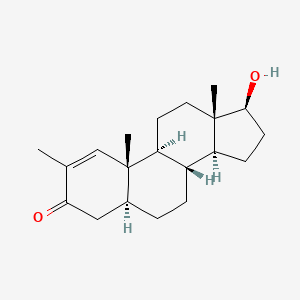
Practical use
Evidence interpretation and concrete review questions
- Retain the acetate designation
- Do not strip the formulation from the evidence.
- Separate chemistry from outcomes
- Ask whether a claim concerns metabolites, muscle function or adverse effects.
- Check near-identical names
- Stenbolone, methylstenbolone and methenolone require separate evidence.
Overview
Stenbolone is 2-methyl-5α-androst-1-en-17β-ol-3-one. The primary study used stenbolone acetate. It differs from methenolone in methyl-group position and from methylstenbolone in additional substitution.
Risks and limitations
A single volunteer’s urine cannot establish tolerability, long-term risk or an effective clinical purpose. Shared metabolic routes with another steroid do not prove shared safety.
How to read this
Chemical specificity is especially important when similar names are used to borrow another compound’s reputation.
Research explained
Stenbolone acetate metabolism
Who was studied
Urine from one male volunteer after controlled exposure to stenbolone acetate, analyzed with multiple derivatization methods and reference comparisons.
What was found
Nine metabolites were identified, mainly in conjugated fractions. The study described shared and distinct transformation pathways compared with methenolone acetate.
What it cannot establish
One-person analytical study, not a comparative trial of muscle effects or toxicity. Some steroid identities depended on structural comparisons.
Read the original studyConjugated does not mean clinically inactive in every sense
The fractions describe laboratory handling of excreted metabolites; they do not settle the earlier biological effects.
Supporting sourceMethyl position changes identity
The position-two designation distinguishes stenbolone from the related position-one compound methenolone.
Supporting sourceClaims versus findings
Not established
Similar metabolism proves identical clinical safety.
The study compared transformation routes, not adverse-event outcomes.
Check the evidenceCommon questions
Is stenbolone acetate identical to the parent steroid?
It is an ester form; the formulation should remain explicit when describing the study.
SourceSources
PubChem chemical identity; checked October 1, 2026
Sources checked 2026-10-01.
General education; not a personal treatment plan.