

Metabolic medicines
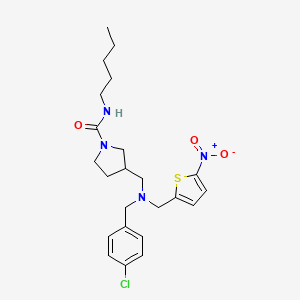
SR9011
A REV-ERB research compound studied in circadian biology and microglia, with no established human endurance benefit in these sources.
Animal and cell research
Practical use
Reviewed practical notes
- Check the exact compound
- SR9011 and SR9009 evidence should stay distinct.
- Read competing effects
- Reduced cytokines can coexist with impaired cell function.
- Ask for human outcomes
- Neither paper establishes improved human sleep, endurance or recovery.
Overview
SR9011 is studied as a synthetic ligand for REV-ERB nuclear receptors, which participate in circadian and metabolic regulation. It is chemically distinct from SR9009. A paper about one should not automatically be used to substantiate the other.
Risks and limitations
In isolated microglia, lower inflammatory signaling occurred alongside reduced phagocytosis, altered cellular energy handling and disrupted clock-gene rhythms. These are biological effects with uncertain clinical meaning, not proof of beneficial immune support or long-term safety.
How to read this
The sources support investigation of circadian and metabolic mechanisms. They do not establish human fat loss, better sleep or athletic benefit. Human dosing, product identity and a therapeutic safety margin cannot be inferred from these experiments.
Research explained
Synthetic REV-ERB ligands in mice
Who was studied
A 2012 experimental program studying SR9009 and SR9011 in mouse circadian and metabolic systems.
What was found
The investigators reported altered circadian behavior, clock-gene expression and metabolic signaling across the experiments.
What it cannot establish
The paper covers more than one ligand and experimental condition. Its aggregate findings should not be assigned to SR9011 alone without matching the individual experiment.
Read the original studySR9011 in primary microglia
Who was studied
Primary microglial cells isolated from rat pups.
What was found
SR9011 reduced selected inflammatory signals but also reduced phagocytosis, mitochondrial respiration and ATP production and altered clock-gene rhythms.
What it cannot establish
An isolated-cell response cannot predict a favorable effect on human brain health. Suppressing an immune-cell function is not automatically beneficial.
Read the original studyLess inflammation is an incomplete claim
A cell study can show lower inflammatory markers while also impairing functions needed for normal tissue maintenance. The combination of effects and the disease context matter more than one favorable-sounding marker.
Supporting sourceSources
Sources checked 2026-10-01.
General education; not a personal treatment plan.