

Metabolic medicines
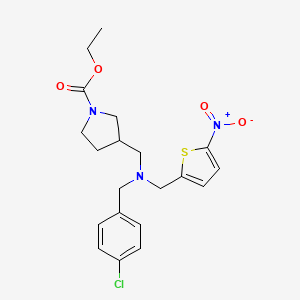
SR9009
A metabolic research tool with uncertain target specificity, a serious liver-injury report and no established human performance benefit.
Mechanistic uncertainty; human harm case; retraction recorded
Practical use
Reviewed practical notes
- Question target certainty
- A named receptor target does not explain every observed effect.
- Treat jaundice seriously
- Yellow skin or eyes after a substance exposure warrants urgent medical assessment.
- Check publication status
- A retracted benefit paper should not remain in an efficacy argument.
Overview
SR9009 is often described as a REV-ERB agonist, linking it to circadian and metabolic signaling. A genetic-deletion experiment showed that important cellular effects persisted without REV-ERB receptors. It therefore cannot be treated as a clean test of that target’s biology.
Risks and limitations
A published case describes acute liver failure requiring transplantation after a teenager used a product reported as SR9009. The temporal association is a serious signal, but a single case cannot establish frequency, confirm every product’s composition or isolate causation with certainty.
How to read this
The reviewed evidence does not establish safe or effective human performance use. A retracted disc-degeneration paper must also be excluded from benefit claims. A long list of publications is not a substitute for valid, relevant evidence.
Research explained
Testing whether cellular effects require REV-ERB
Who was studied
Cells genetically lacking both REV-ERB receptors, including hepatocyte and embryonic-stem-cell models.
What was found
SR9009 still changed metabolism and gene expression and reduced cell viability in receptor-deficient cells.
What it cannot establish
This challenges target specificity; it does not determine every mechanism or quantify clinical toxicity in humans.
Read the original studyAcute liver-failure case
Who was studied
A 17-year-old male with reported SR9009 exposure and progressive acute liver failure.
What was found
The report describes emergency liver transplantation after extensive investigation for other causes.
What it cannot establish
A case report is a hazard signal, not a controlled causal test or a denominator for estimating risk among users. Product composition is not independently established by this guide.
Read the original studyA retraction changes the usable evidence
The 2026 notice retracts the 2024 iScience paper on SR9009, inflammatory cell death and intervertebral-disc degeneration. Its claimed benefits are not counted as evidence here; the notice is retained so readers can see the correction.
Supporting sourceSources
2019 receptor-deletion experiment
Sources checked 2026-10-01.
General education; not a personal treatment plan.