

Hormone medicines
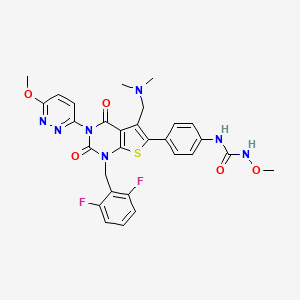
Relugolix
An oral GnRH antagonist that suppresses testosterone in advanced prostate cancer; combination products used in gynecology answer different questions.
Randomized active-comparator prostate-cancer evidence; no universal safety ranking
Also known as: Orgovyx
Practical use
Clinical context and evidence interpretation
- Confirm the product
- Distinguish relugolix alone from a fixed combination before comparing an indication, warning or trial.
- Keep outcomes separate
- Ask whether the quoted benefit concerns testosterone, cancer progression, survival or cardiovascular events.
- Bring the complete list
- Include prescription medicines, over-the-counter products and supplements when the oncology team checks interactions and treatment burden.
HERO: sustained testosterone suppression
Overview
Relugolix blocks pituitary GnRH receptors, reducing LH, FSH and testosterone. US Orgovyx is indicated for adults with advanced prostate cancer. Myfembree combines relugolix with estradiol and norethindrone acetate for separate gynecological indications, so ingredient, product and trial results must stay distinct.
Risks and limitations
Androgen-deprivation effects include hot flashes, fatigue and metabolic or blood-count changes. QT prolongation and serious allergy are label concerns. P-glycoprotein and CYP3A-related interactions can alter exposure. Breathing difficulty, facial swelling, collapse or severe palpitations require urgent assessment.
How to read this
The measured goal is sustained androgen suppression for cancer treatment. Testosterone recovery after stopping in a selected trial subgroup does not provide a recovery protocol for nonmedical anabolic-drug use.
Research explained
HERO: sustained testosterone suppression
Who was studied
934 men randomized to relugolix or leuprolide for 48 weeks; 930 received treatment. The trial was open-label and focused on testosterone suppression in advanced prostate cancer.
- Relugolix: sustained suppression
- 96.7 percent
- Leuprolide: sustained suppression
- 88.8 percent
What was found
Sustained castration-level testosterone occurred in 96.7% versus 88.8%, a difference of 7.9 percentage points. Reported major cardiovascular events occurred in 2.9% versus 6.2% (HR 0.46; 95% CI 0.24–0.88).
What it cannot establish
The primary endpoint was testosterone suppression, not overall survival. Cardiovascular events were a safety finding rather than the primary endpoint of a dedicated cardiovascular-outcome trial; the result should not become a guarantee for every patient.
Read the original studyAntagonist action avoids the same initial agonist sequence
Relugolix blocks the receptor directly. This differs from an agonist that first stimulates the system before longer-term suppression.
Supporting sourceA combination product is a separate treatment
Estradiol and norethindrone acetate change the purpose and risk context of Myfembree. Do not apply Orgovyx’s cancer trial to that combination as if it tested the same treatment.
Supporting sourceClaims versus findings
Not established
HERO proved longer survival or complete cardiovascular protection.
It established superior sustained testosterone suppression over its comparator and reported a cardiovascular safety difference; neither is proof of a survival advantage or absence of cardiovascular risk.
Check the evidenceCommon questions
Does oral delivery remove the need for interaction review?
No. The label identifies clinically meaningful transporter and enzyme interactions.
SourceSources
HERO: sustained testosterone suppression
US prescribing information; checked October 1, 2026
Sources checked 2026-10-01.
General education; not a personal treatment plan.