

Androgens
Quinbolone
A steroid ether with human metabolism evidence and a historical comparison reporting no benefit for hereditary-angioedema prevention.
Historical human metabolism and negative clinical comparison; primary abstracts reviewed; evidence checked 2026-10-01
Practical use
Evidence interpretation and concrete review questions
- Keep the linkage explicit
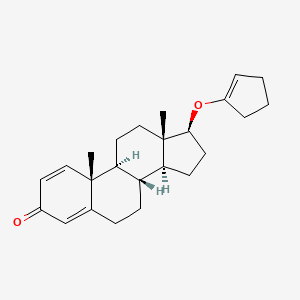
- Record quinbolone as an ether, not an undecylenate ester.
- Match the clinical outcome
- The negative finding concerns angioedema-attack prevention, not every possible biological effect.
- Respect the grouped result
- Do not invent a quinbolone-specific response percentage or borrow danazol’s safety observations.
Quinbolone and related steroids in humans
Historical hereditary-angioedema comparison
Overview
Quinbolone is the 17-cyclopentenyl enol ether of boldenone, distinct from an ester such as boldenone undecylenate. Similar urinary metabolites support conversion to the parent steroid. That relationship did not guarantee effectiveness in a separate clinical setting.
Risks and limitations
Neither accessible abstract provides a quantitative quinbolone-specific adverse-event rate. Metabolic conversion and absence of detailed harm reporting cannot establish safety. The clinical paper’s favorable long-term observations concerned danazol, not quinbolone.
How to read this
The clinical finding concerns prevention of hereditary-angioedema attacks. It does not prove quinbolone is biologically inactive or establish its effects on muscle, anemia or other outcomes.
Research explained
Quinbolone and related steroids in humans
Who was studied
Healthy subjects in a comparative urinary-metabolite investigation published in 1971; sample size and full methods were not available in the accessed abstract.
What was found
Quinbolone and boldenone produced very similar urinary patterns, supporting cleavage of the ether linkage in vivo. The related dione also gave similar catabolite patterns.
What it cannot establish
An analytical metabolism study, not a measured strength, clinical efficacy or safety comparison. Full-text appraisal was not possible.
Read the original studyHistorical hereditary-angioedema comparison
Who was studied
Patients receiving prophylactic androgen treatment for hereditary angioedema; the abstract does not state sample sizes or allocation methods.
What was found
The authors compared danazol/stanozolol with quinbolone, nandrolone decanoate and mesterolone, reporting the latter group ineffective at preventing attacks.
What it cannot establish
A grouped negative finding: no quinbolone-specific patient count, attack rate or effect estimate is supplied. Randomization and detailed methods were not verified.
Read the original studyEther is not another spelling of ester
The different linkage is part of the compound identity and should stay visible when comparing formulations.
Supporting sourceA shared drug class does not guarantee the same clinical result
The angioedema comparison is relevant negative evidence, despite a title emphasizing danazol and stanozolol.
Supporting sourceClaims versus findings
Contradicted by this comparison
An anabolic steroid must work for angioedema because other androgens do.
Quinbolone was among the comparators reported ineffective; activity in one setting cannot guarantee another clinical benefit.
Check the evidenceCommon questions
Do similar metabolites establish identical exposure or safety?
No. The metabolism paper supports a pathway, not identical concentrations, clinical effects or safety.
SourceSources
Quinbolone and related steroids in humans
Historical hereditary-angioedema comparison
PubChem chemical identity; checked October 1, 2026
Additional primary or official source
Sources checked 2026-10-01.
General education; not a personal treatment plan.