

Hormone medicines
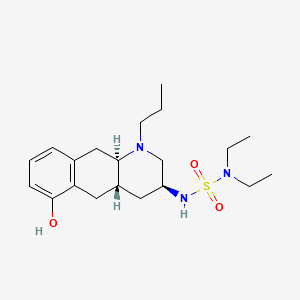
Quinagolide
A dopamine agonist used for hyperprolactinemia, with a recent UK discontinuation notice and an unsuccessful phase 2 endometriosis-ring trial.
Small comparative hyperprolactinemia trial; negative phase 2 ring study; current UK supply change
Also known as: Norprolac
Practical use
Evidence interpretation and clinical context
- Check indication and formulation
- Keep oral hyperprolactinemia evidence separate from the experimental ring.
- Retain the primary result
- Exploratory MRI findings should not replace a negative primary endpoint.
- Check supply as a separate fact
- Regulatory history and local availability can change on different timelines.
Quinagolide vaginal ring for reduction of endometriotic lesions: Results from the QLARITY trial.
UK labeling and availability differ — primary or official source
Overview
Quinagolide is a non-ergot dopamine D2-receptor agonist that lowers prolactin secretion. Its oral endocrine use and experimental vaginal-ring development are separate formulations and indications.
Risks and limitations
The UK product information includes postural hypotension or fainting, somnolence, psychiatric effects and impulse-control disorders. A prolactin-lowering effect does not establish an appropriate response to an unexplained symptom or an isolated laboratory result.
How to read this
The same molecule can succeed for one endocrine endpoint while failing in another condition. Clinical indication and formulation remain essential parts of the evidence.
Research explained
A randomized cross-over study comparing cabergoline and quinagolide in the treatment of hyperprolactinemic patients.
Who was studied
20 adults with hyperprolactinemia in a randomized crossover comparison with cabergoline.
What was found
Both medicines lowered prolactin and improved related symptoms. Prolactin normalized in 75% with quinagolide and 90% with cabergoline under the studied conditions.
What it cannot establish
The small trial cannot establish universal comparative effectiveness. It studied diagnosed hyperprolactinemia, not routine hormone optimization.
Read the original studyQuinagolide vaginal ring for reduction of endometriotic lesions: Results from the QLARITY trial.
Who was studied
67 women with endometrioma, deep infiltrating endometriosis and/or adenomyosis in the placebo-controlled QLARITY phase 2 ring trial.
What was found
Quinagolide did not significantly reduce the primary lesion-size outcome or improve patient-reported outcomes versus placebo.
What it cannot establish
Exploratory imaging differences do not overturn the negative primary result. A vaginal-ring experiment cannot be treated as evidence for the oral formulation in endometriosis.
Read the original studyUK labeling and availability differ
The UK product information lists hyperprolactinemia, including prolactin-secreting pituitary tumors. A current label does not by itself confirm current supply.
Supporting sourceSupply update checked in 2026
The NHS formulary carries a July 2026 quinagolide discontinuation notice and directs review of affected patients by their specialist. This is a UK supply development, not proof of worldwide withdrawal.
Supporting sourceClaims versus findings
Not supported
The QLARITY trial established an effective endometriosis treatment.
The primary lesion-size comparison and patient-reported outcomes did not significantly favor the quinagolide ring.
Check the evidenceCommon questions
Does a UK prescribing-information page prove the product remains available?
No. The current NHS discontinuation notice needs to be considered alongside the older product information.
SourceSources
Quinagolide vaginal ring for reduction of endometriotic lesions: Results from the QLARITY trial.
UK labeling and availability differ — primary or official source
Supply update checked in 2026 — primary or official source
Sources checked 2026-10-01.
General education; not a personal treatment plan.