

Hormone medicines
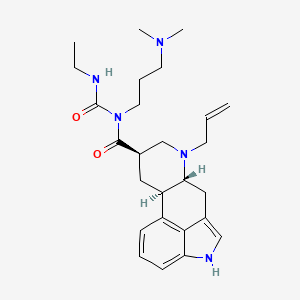
Cabergoline
A dopamine agonist for pathological prolactin excess, with cardiac, blood-pressure and behavioral risks that matter independently of the prolactin result.
Randomized clinical and observational evidence
Practical use
Applying the explained evidence
- Where it fits
- A dopamine agonist for pathological prolactin excess, with cardiac, blood-pressure and behavioral risks that matter independently of the prolactin result.
- Put the information into practice
- A symptom does not identify its cause. The evidence concerns confirmed pathological hyperprolactinemia, not a diagnosis made from a bodybuilding compound name.
- Diagnosis before a number
- Write down the symptoms, the reason a test was ordered, and the medicines already used. An isolated hormone result is a question to interpret, not a stand-alone reason to add another medicine.
- Keep this limit in view
- The trial required hyperprolactinemic amenorrhea; it did not test symptom-driven suppression in people with normal prolactin.
Overview
Cabergoline stimulates dopamine D2 receptors and suppresses prolactin secretion. Its US indication covers hyperprolactinemic disorders, including prolactin-secreting adenomas. It is not evidence-based insurance against every sexual symptom or breast complaint associated with other drugs.
Risks and limitations
The label warns about valvular disease and fibrotic complications, orthostatic hypotension and compulsive behaviors. New breathlessness, chest symptoms, swelling, fainting or unusual gambling, spending or sexual urges require assessment. Existing valvular/fibrotic disease and uncontrolled hypertension affect suitability.
How to read this
A symptom does not identify its cause. The evidence concerns confirmed pathological hyperprolactinemia, not a diagnosis made from a bodybuilding compound name.
Research explained
Randomized clinical comparison
Who was studied
459 women with hyperprolactinemic amenorrhea; eight blinded weeks followed by 16 open-treatment weeks.
- Normal prolactin: cabergoline
- 83 %
- Normal prolactin: bromocriptine
- 59 %
What was found
Stable normal prolactin occurred in 83% with cabergoline versus 59% with bromocriptine. Ovulatory cycles or pregnancy occurred in 72% versus 52%. Intolerance caused discontinuation in 3% versus 12%.
What it cannot establish
These are women with a defined disorder, not men with unexplained symptoms. Treatment became open-label, and six months cannot exclude rare delayed harms.
Read the original studyBroader clinical experience
Who was studied
Retrospective records of 455 patients, including 102 men, from nine Belgian centers.
What was found
Prolactin normalized in 84% of bromocriptine-intolerant patients and 70% of resistant patients. Response varied with underlying diagnosis.
What it cannot establish
No randomized comparator; selected clinical records and treatment differences limit causal interpretation. A single common follow-up duration is not reported in the abstract.
Read the original studyWhy the underlying diagnosis matters
Microadenoma, macroadenoma and idiopathic hyperprolactinemia were distinct groups in the larger series. Their response differences argue against treating every elevated value as the same problem.
Supporting sourceLower prolactin is one endpoint
The randomized trial separately measured biochemical normalization, reproductive outcomes and intolerance. Improving a laboratory value does not imply every symptom will improve or that cardiac monitoring becomes unnecessary.
Supporting sourceInteractions and monitoring
Dopamine antagonists can oppose the intended effect. The label calls for cardiovascular evaluation and echocardiographic monitoring for valvulopathy; a normal prolactin result does not replace these checks.
Supporting sourceBehavioral effects can be missed
Impulse-control changes may feel rewarding rather than adverse to the person experiencing them. A new pattern of gambling, spending or sexual compulsion is clinically relevant, not proof of successful optimization.
Supporting sourceLimits for physique users
No trial cited here evaluates routine cabergoline added to an anabolic-steroid combination. Benefit rates and intolerance differences from the clinical trials cannot be converted into a preventive stack recommendation.
Supporting sourceClaims versus findings
Not established
Any libido problem means prolactin should be suppressed.
The trial required hyperprolactinemic amenorrhea; it did not test symptom-driven suppression in people with normal prolactin.
Check the evidenceCommon questions
Does good short-term tolerance rule out valve problems?
No. Short clinical trials and absence of symptoms do not replace the label’s cardiovascular assessment and follow-up requirements.
SourceSources
Cabergoline prescribing information
Randomized comparison with bromocriptine
455-patient retrospective study
Sources checked 2026-09-28.
General education; not a personal treatment plan.