

Metabolic medicines
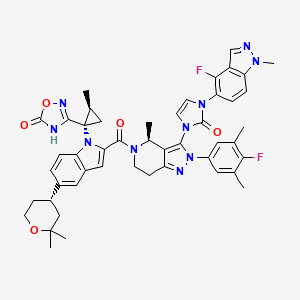
Orforglipron
An oral nonpeptide GLP-1 agonist with clinical glycemic, weight and drug-interaction studies.
Human clinical research
Also known as: LY3502970
Practical use
Applying the explained evidence
- Where it fits
- An oral nonpeptide GLP-1 agonist with clinical glycemic, weight and drug-interaction studies.
- Put the information into practice
- Clinical outcomes and drug exposure answer different questions. Both matter when a compound is used alongside other medicines.
- The outcome being treated
- Identify whether the evidence concerns a diagnosed condition, body weight, appetite or a laboratory marker. Check which outcomes were measured and over what follow-up before transferring a finding to another goal.
- Keep this limit in view
- Participants had longstanding diabetes and were receiving titrated basal insulin. These results do not predict weight change in people without diabetes or without the same background therapy.
Overview
Orforglipron is a small molecule that activates the GLP-1 receptor. Its oral form does not make its evidence interchangeable with an oral or injectable peptide medicine.
Risks and limitations
In ACHIEVE-5, the most frequent adverse events were gastrointestinal, usually mild or moderate. Clinically significant hypoglycemia was not increased versus placebo under that trial’s supervised insulin-management conditions.
How to read this
Clinical outcomes and drug exposure answer different questions. Both matter when a compound is used alongside other medicines.
Research explained
ACHIEVE-5: added to insulin glargine
Who was studied
546 adults with inadequately controlled type 2 diabetes; 40-week randomized double-blind phase III trial.
What was found
HbA1c fell by 1.58–1.88 percentage points across active groups versus 0.79 with placebo. Mean weight changes ranged from −2.6% to −5.4% versus +0.2%.
What it cannot establish
Participants had longstanding diabetes and were receiving titrated basal insulin. These results do not predict weight change in people without diabetes or without the same background therapy.
Read the original studySix phase I drug-interaction studies
Who was studied
Healthy participants; clinical pharmacokinetic studies examined enzyme and transporter interactions.
What was found
Clarithromycin and cyclosporine increased orforglipron exposure; carbamazepine decreased it. Quinidine did not meaningfully alter its exposure. Orforglipron produced no clinically meaningful exposure change for midazolam, digoxin or atorvastatin in these studies.
What it cannot establish
An interaction result is specific to the tested medicine and conditions. Absence of an effect for one drug does not establish compatibility with all drugs in its class.
Read the original studyCYP3A4 and transporters: more than one route to an interaction
The studies identify orforglipron as a substrate of CYP3A4 and several transporters. The clinical experiments distinguished effects on the drug from effects the drug had on other medicines. This direction matters: “A changes B” and “B changes A” are not equivalent statements.
Supporting sourceSources
ACHIEVE-5: added to insulin glargine
Six phase I drug-interaction studies
Sources checked 2026-09-28.
General education; not a personal treatment plan.