

SARMs
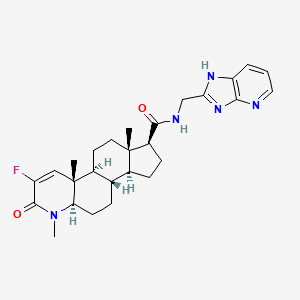
MK-0773
A SARM that increased lean mass in a randomized trial of older women without a significant advantage in strength or physical performance.
Randomized six-month trial in 170 older women; mass benefit without functional superiority
Practical use
Evidence interpretation and clinical context
- Keep the negative endpoint
- A useful summary includes the functional result beside the lean-mass result.
- Use between-group comparisons
- Within-group gains do not isolate the drug’s effect.
- Include liver findings
- A body-composition benefit must be assessed with the observed adverse effects.
Overview
MK-0773 was investigated for sarcopenia, the loss of muscle mass and function associated with aging. A six-month human trial directly tested whether increasing lean mass also improved outcomes that matter to daily activity.
Risks and limitations
Elevated liver transaminases occurred more often with MK-0773 and resolved after treatment stopped. The trial’s lack of a prominent androgenization signal does not establish freedom from all androgen-related or long-term risks.
How to read this
Lean body mass includes more than functional contractile tissue. Strength, walking and other performance tests are needed to determine whether a change in body composition improves function.
Research explained
A phase IIA randomized, placebo-controlled clinical trial to study the efficacy and safety of the selective androgen receptor modulator (SARM), MK-0773 in female participants with sarcopenia.
Who was studied
170 women aged at least 65 with sarcopenia; both randomized groups received nutritional support.
What was found
MK-0773 increased lean mass more than placebo. Strength and physical-performance outcomes did not show a significant between-group advantage, despite improvement within both groups.
What it cannot establish
Results apply to the studied older women and nutritional setting. The trial does not establish healthy-user hypertrophy or improved independence.
Read the original studyRegulatory status
FDA states that SARMs are unapproved drugs, not dietary supplements.
Supporting sourceWhy the placebo comparison matters
Improvement from baseline occurred in both groups. The causal drug question is whether the MK-0773 group improved more, not whether its participants improved at all.
Supporting sourceClaims versus findings
Contradicted in this trial
Added lean mass necessarily translates into more strength.
The mass difference did not produce a significant strength or physical-performance advantage.
Check the evidenceCommon questions
Was the trial simply too short to find any effect?
It detected a body-composition effect over six months. Longer functional benefit remains a separate, unproven hypothesis.
SourceSources
Regulatory status — primary or official source
Sources checked 2026-10-01.
General education; not a personal treatment plan.