

Hair and skin
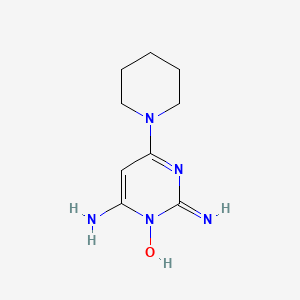
Minoxidil
Hair-growth evidence depends on route and diagnosis; topical improvement does not mean androgen-related hair loss has been eliminated.
Randomized male pattern-hair-loss trials
Practical use
Applying the explained evidence
- Where it fits
- Hair-growth evidence depends on route and diagnosis; topical improvement does not mean androgen-related hair loss has been eliminated.
- Put the information into practice
- Counted scalp hairs, photographs and personal satisfaction are different endpoints. Pattern hair loss is also not the same diagnosis as sudden diffuse shedding, scarring or an inflamed scalp.
- Define the change you want to assess
- Record the specific concern and its time course. When evaluating a claim, look for a matching diagnosis, a defined measurement and an appropriate comparison rather than relying on a before-and-after photograph alone.
- Keep this limit in view
- The randomized trial did not show superiority on its primary density outcomes, although a secondary photographic measure favored it.
Overview
Minoxidil is used topically for androgenetic hair loss. The cited US 5% topical label is for men with vertex thinning; other routes and formulations have different indications and risks. It is not a 5-alpha-reductase inhibitor.
Risks and limitations
Topical irritation and itching occur. Chest pain, rapid heartbeat, dizziness, sudden weight gain or swelling warrant stopping use and obtaining medical advice according to labeling. Applying more is not a proven shortcut. Oral treatment is systemic and cannot inherit the topical product’s safety assumptions.
How to read this
Counted scalp hairs, photographs and personal satisfaction are different endpoints. Pattern hair loss is also not the same diagnosis as sudden diffuse shedding, scarring or an inflamed scalp.
Research explained
Topical concentration comparison
Who was studied
393 men aged 18–49 with androgenetic alopecia; 48-week randomized double-blind trial.
- Participants
- 393 men
- Trial length
- 48 weeks
What was found
The 5% solution outperformed 2% and placebo on hair-count and coverage measures. Reported regrowth at 48 weeks was 45% greater with 5% than 2%, with more itching and local irritation.
What it cannot establish
45% is a relative comparison with the 2% group, not 45% of all lost hair restored or a guaranteed responder rate. Results concern this formulation, scalp region and diagnosis.
Read the original studyOral versus topical route
Who was studied
90 men enrolled at one Brazilian center; 68 completed a 24-week randomized double-blind study.
- Oral-arm hypertrichosis
- 49 %
- Oral-arm headache
- 14 %
What was found
Oral treatment did not demonstrate superiority on the main hair-density outcomes. Photographic vertex assessment favored oral treatment, but frontal photographs did not. In the oral arm, 49% reported hypertrichosis and 14% headache.
What it cannot establish
Single-center study, 22 noncompleters and endpoint-dependent findings limit generalization. This is not evidence that oral and topical products have identical safety.
Read the original studyWhat a hair-growth number means
The 48 week study counted nonvellus hairs in a target region and separately collected coverage ratings. A relative count advantage cannot be translated into a percentage of a person’s entire scalp restored.
Supporting sourceWhy routes should not be blended
The 24 week trial compared a systemic route with scalp application. Its adverse-effect findings belong to those specific treatment groups; quoting only the improved photographs omits the main density result.
Supporting sourceOngoing use and expectations
The topical label states continued use is needed to maintain regrowth and that results vary. A completed trial does not show that gained hair persists indefinitely after stopping.
Supporting sourceDifferent causes of shedding
The topical label cautions against self-treating sudden, patchy or unexplained hair loss. Establishing the pattern matters before interpreting a product failure or adding another treatment.
Supporting sourceWhat remains unknown for enhanced athletes
Neither cited trial specifically tests hair protection during anabolic-androgenic steroid exposure. A regrowth response cannot be interpreted as neutralizing every androgenic effect.
Supporting sourceClaims versus findings
Not established
Oral minoxidil is clearly better in every way.
The randomized trial did not show superiority on its primary density outcomes, although a secondary photographic measure favored it.
Check the evidenceCommon questions
Does 45% more regrowth mean a 45% chance it works?
No. It describes a relative magnitude of regrowth compared with the 2% solution at 48 weeks, not the probability of response.
SourceSources
Oral versus topical randomized trial
Sources checked 2026-09-28.
General education; not a personal treatment plan.