

Androgens
Methasterone
A potent steroid found in marketed supplements, with a human case series documenting severe cholestatic liver injury.
Human liver-injury case series plus product-analysis investigation; evidence checked 2026-10-01
Also known as: Methasteron · Superdrol
Practical use
Evidence interpretation and concrete review questions
- Act on jaundice or dark urine
- Seek medical assessment rather than waiting for a supplement to clear.
- Include recently stopped products
- The chronology can extend beyond the last use.
- Preserve lot information
- It may help distinguish known ingredients from contamination or mislabeling.
Five cases of cholestatic liver injury
Overview
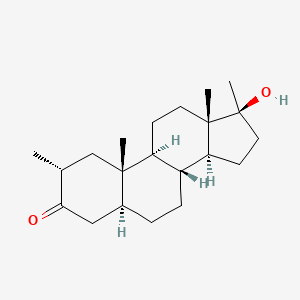
Methasterone, also spelled methasteron, is a dimethylated androgen often associated with the name Superdrol. Chemical analysis has found it in products marketed as vitamins as well as in steroid-oriented products; the packaging category is not proof of contents.
Risks and limitations
In a five-case series, jaundice began after exposure had already ended and bilirubin continued to rise before recovery. Stopping exposure does not guarantee that an evolving injury has peaked.
How to read this
Clinical cases establish a credible hazard, while product testing helps explain why unsuspected exposure can occur.
Research explained
Five cases of cholestatic liver injury
Who was studied
Five previously healthy patients with methasteron exposure assessed at tertiary-care centers.
What was found
Jaundice appeared after discontinuation; bilirubin peaked later. All five ultimately recovered without identified residual hepatic dysfunction in the report.
What it cannot establish
Selected cases cannot calculate incidence. Recovery in these patients is not a guarantee for another person or proof that severe injury is benign.
Read the original studyUnexpected product categories can still contain steroids
An investigation of implicated vitamin/mineral lots detected methasterone and other androgens and demonstrated androgen-receptor activity.
Supporting sourceDo not wait for a presumed clearance date
The clinical timeline shows that symptoms and biochemical injury can evolve after the last exposure.
Supporting sourceClaims versus findings
Contradicted by these cases
No symptoms during use means there cannot be a later liver injury.
Jaundice developed after the reported exposure ended.
Check the evidenceCommon questions
Do five recoveries prove every case resolves safely?
No. A small case series cannot guarantee an individual course.
SourceSources
Five cases of cholestatic liver injury
PubChem chemical identity; checked October 1, 2026
Additional primary or official source
Sources checked 2026-10-01.
General education; not a personal treatment plan.