

Performance supplements
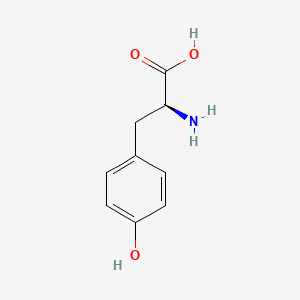
L-tyrosine
A catecholamine precursor studied under demanding conditions. Some cognitive findings are positive, while physical-performance findings vary.
Small human stress and exercise trials
Also known as: tyrosine
Practical use
Reviewed practical notes
- Name the job you want it to do
- Focus during a demanding task and faster cycling are separate targets.
- Look for the counterexample
- Read both the positive exhaustion study and the later null time-trial result before treating a headline as settled.
- Measure the outcome
- Use repeatable performance records. A change in a blood marker does not by itself show that your training improved.
Overview
Tyrosine is a precursor used in catecholamine synthesis. Supplying a precursor does not guarantee better focus or performance: the task and conditions matter.
Risks and limitations
These brief performance studies cannot establish long-term safety or compatibility with an individual’s medicines. Results from controlled cold or heat exposure are not instructions to reproduce those conditions.
How to read this
A result on a memory task during severe cold does not automatically transfer to everyday concentration or a normal gym session.
Research explained
Working memory in cold exposure
Who was studied
Eight men tested at cold and room temperatures with tyrosine or placebo.
What was found
Tyrosine improved the memory-task condition most impaired by cold. It did not improve that task at room temperature.
What it cannot establish
Small experiment with a specific stressor and task. It does not show a general increase in intelligence or focus.
Read the original studyAn early positive exercise finding
Who was studied
Eight men in a randomized crossover study of cycling to exhaustion in heat.
What was found
Average time to exhaustion was 80.3 minutes with tyrosine and 69.2 minutes with placebo.
What it cannot establish
A fixed-workload exhaustion test differs from self-paced sport performance; this small result needs comparison with other studies.
Read the original studyA later trial with no faster time trial
Who was studied
Eight recreationally trained men completed four randomized conditions with different tyrosine exposures.
What was found
The blood amino-acid ratio changed, but cycling time-trial performance did not significantly improve.
What it cannot establish
This does not prove every possible application fails; it directly challenges a simple more-precursor-means-better-performance claim.
Read the original studyCognition and physical output are separate
A soccer-simulation trial found better vigilance but no significant effect on the other physical-performance measures. Report the benefit at the level actually tested.
Supporting sourceSources
Sources checked 2026-10-01.
General education; not a personal treatment plan.