

Nootropics
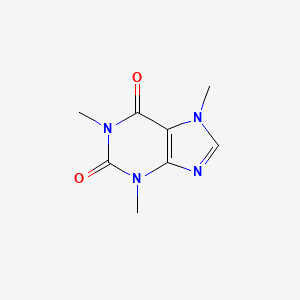
Caffeine
A performance aid whose useful effect must be weighed against sleep disruption, stimulant symptoms and individual response.
Human exercise and sleep experiments
Practical use
Applying the explained evidence
- Where it fits
- A performance aid whose useful effect must be weighed against sleep disruption, stimulant symptoms and individual response.
- Put the information into practice
- An acute cycling improvement can coexist with a worse night of sleep. These studies test those components separately and do not calculate a net long-term training benefit.
- Make the claim measurable
- Specify the claimed effect: alertness, memory, attention or another outcome. Check whether researchers measured that outcome directly; a mechanism or a subjective feeling is a different kind of evidence.
- Keep this limit in view
- The acute crossover did not find that pattern; the randomized habituation experiment shows why an absolute claim is still inappropriate.
Overview
Caffeine is a stimulant found in drinks and supplements. Acute performance, daily habituation and later sleep are separate outcomes; feeling more awake does not establish that recovery improved.
Risks and limitations
FDA identifies palpitations, blood-pressure elevation, anxiety, insomnia and gastrointestinal symptoms with excessive exposure. Pure concentrated products can cause severe toxicity. Total intake across drinks and supplements matters; personal sensitivity varies.
How to read this
An acute cycling improvement can coexist with a worse night of sleep. These studies test those components separately and do not calculate a net long-term training benefit.
Research explained
Acute time-trial response
Who was studied
40 endurance-trained male cyclists; double-blind crossover trials.
- Time: caffeine
- 29.92 minutes
- Time: placebo
- 30.81 minutes
What was found
Mean completion time was 29.92 minutes with caffeine, 30.81 with placebo and 31.14 without supplementation. Habitual-intake tertiles did not significantly differ in response.
What it cannot establish
Habitual intake was not randomized; one acute experiment cannot establish that tolerance never develops.
Read the original studyHabituation under repeated exposure
Who was studied
18 low-habitual users randomized to 28 days of caffeine or placebo.
What was found
The caffeine group’s work fell from 383.3 kJ on the initial acute-caffeine test to 358.0 kJ after repeated exposure. The placebo-assigned group retained its acute benefit.
What it cannot establish
Small sample and a different exercise protocol from the 40-cyclist study; it does not identify a universal reset schedule.
Read the original studySleep after earlier consumption
Who was studied
Controlled home sleep experiment comparing caffeine at bedtime, three hours before and six hours before.
What was found
Each caffeine timing significantly disturbed sleep relative to placebo, including the six-hour condition.
What it cannot establish
A fixed exposure and selected participants do not define a safe cutoff for everyone.
Read the original studyWhy the tolerance studies differ
Grouping people by their existing habits is different from assigning repeated exposure. Their findings answer related but nonidentical questions.
Supporting sourceA group mean is not every rider
Only some participants improved beyond the test’s ordinary variation. A statistically faster average is not a guaranteed personal response.
Supporting sourceSleep can be the hidden cost
The sleep study measured disruption beyond the period when a person might expect to feel stimulated. Feeling sleepy is not an objective sleep-quality test.
Supporting sourceConcentration changes the hazard
Bulk caffeine powder can contain many servings in a small volume. FDA warns that consumer measurement errors can become life-threatening.
Supporting sourceWhat these studies cannot rank
They do not test stimulant combinations, predict muscle gain or establish protection from insufficient sleep.
Supporting sourceClaims versus findings
Not established
Habitual use always eliminates the benefit.
The acute crossover did not find that pattern; the randomized habituation experiment shows why an absolute claim is still inappropriate.
Check the evidenceCommon questions
Does taking it earlier guarantee normal sleep?
No. The controlled experiment found disruption even in its six-hour condition.
SourceSources
Habitual consumption and cycling performance
Four-week habituation experiment
FDA caffeine safety information
Sources checked 2026-09-28.
General education; not a personal treatment plan.