

Growth hormone
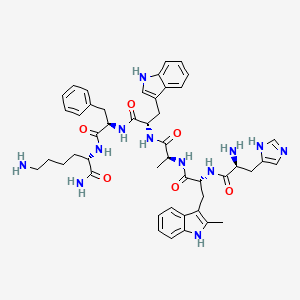
Hexarelin
A growth-hormone secretagogue with small human studies showing effects on prolactin, cortisol and sleep as well as GH.
Experimental / study-specific evidence
Also known as: examorelin
Practical use
Applying the explained evidence
- Where it fits
- A growth-hormone secretagogue with small human studies showing effects on prolactin, cortisol and sleep as well as GH.
- Put the information into practice
- Acute hormone stimulation and clinical benefit are different questions. Short, small physiology studies cannot supply reliable long-term adverse-event percentages.
- Outcome versus a marker
- Separate a change in a hormone measurement or body-composition estimate from the outcome you actually care about. Look for direct measurement of function, symptoms and adverse events.
- Keep this limit in view
- These are laboratory endocrine responses, not adverse-event incidence or muscle-gain percentages. The abstract does not give a participant count, so none is inferred here.
Overview
Hexarelin is a synthetic hexapeptide investigated as a growth-hormone secretagogue. Its human endocrine effects extend beyond GH.
Risks and limitations
The cited experiments observed prolactin and cortisol responses. A small sleep study found reduced deep-sleep measures, showing why greater GH release should not automatically be described as better recovery.
How to read this
Acute hormone stimulation and clinical benefit are different questions. Short, small physiology studies cannot supply reliable long-term adverse-event percentages.
Research explained
Dose-response physiology study
Who was studied
Healthy adult men receiving acute intravenous research exposures.
What was found
The reported GH-response plateau was 140 mU/L. Maximum prolactin rise reached roughly 180% above baseline; cortisol rose approximately 40% under one tested condition.
What it cannot establish
These are laboratory endocrine responses, not adverse-event incidence or muscle-gain percentages. The abstract does not give a participant count, so none is inferred here.
Read the original studySleep and hormone study
Who was studied
Seven healthy young volunteers; nocturnal hexarelin-versus-placebo experiment.
What was found
Stage 4 sleep in the first half of the night and whole-night EEG delta power decreased. GH and prolactin increased across the night, while ACTH and cortisol increased during its first half.
What it cannot establish
A small acute sleep experiment cannot establish chronic insomnia risk or performance effects. It does contradict a simple claim that more GH necessarily means more restorative sleep.
Read the original studyShort intermittent exposure in older adults
Who was studied
Seven older participants in an eight-day intranasal study and seven older women in a 15-day oral study.
What was found
GH responsiveness was maintained. IGF-I did not significantly increase in the intranasal group, while a small increase was reported in the oral group.
What it cannot establish
Different routes and very short follow-up. Preserved responsiveness over days does not establish sustained benefit or lack of desensitization over months.
Read the original studyWhy the experiment’s time window matters
A peak after a challenge, a 24-hour secretion profile and a multiweek body-composition outcome are not interchangeable. In the small sleep experiment, the timing of the cortisol and ACTH changes differed from the timing of GH and prolactin changes. A single hormone reading would miss that pattern.
Supporting sourceSources
Dose-response physiology study
Short intermittent exposure in older adults
Sources checked 2026-09-28.
General education; not a personal treatment plan.