

Growth hormone
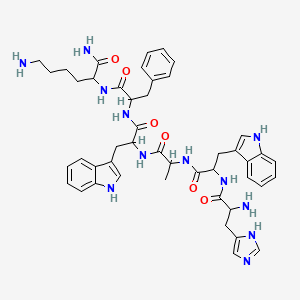
GHRP-6
A synthetic hexapeptide studied for growth-hormone release; mechanistic hormone experiments are not recovery or muscle-building trials.
Experimental / study-specific evidence
Practical use
Applying the explained evidence
- Where it fits
- A synthetic hexapeptide studied for growth-hormone release; mechanistic hormone experiments are not recovery or muscle-building trials.
- Put the information into practice
- The route, sampling interval and hormonal endpoint matter. A peak concentration should not be presented as daily production, muscle growth or a recovery percentage.
- Outcome versus a marker
- Separate a change in a hormone measurement or body-composition estimate from the outcome you actually care about. Look for direct measurement of function, symptoms and adverse events.
- Keep this limit in view
- The antagonist experiment investigates mechanism. It does not test an athletic outcome or support combining drugs outside the study.
Overview
GHRP-6 is a growth-hormone secretagogue. Human experiments indicate that much of its GH response depends on endogenous growth-hormone-releasing hormone signaling.
Risks and limitations
An early six-person experiment found small but significant prolactin and cortisol increases after intravenous exposure. Brief hormone sampling does not establish long-term tolerability or a complete adverse-event profile.
How to read this
The route, sampling interval and hormonal endpoint matter. A peak concentration should not be presented as daily production, muscle growth or a recovery percentage.
Research explained
Testing the role of endogenous GHRH
Who was studied
Nine healthy men aged 20–30 studied on two occasions, with or without a GHRH antagonist.
What was found
The maximum GH increase after GHRP-6 was 33.8 versus 6.2 micrograms/L when GHRH signaling was blocked; P<.0001. Integrated GH exposure was also reduced.
What it cannot establish
The antagonist experiment investigates mechanism. It does not test an athletic outcome or support combining drugs outside the study.
Read the original studyEarly human endocrine measurements
Who was studied
Six healthy men; comparisons of intravenous and intranasal exposure and a brief repeated-exposure period.
What was found
A reported intravenous GH peak averaged 54.9 ±4.2 micrograms/L. IGF-I increased from 94.5 to 125.8 micrograms/L after the brief repeated intranasal period.
What it cannot establish
Different routes produced different responses. The sample and duration were too limited to establish clinical benefit or uncommon harms.
Read the original studyGHRP-6 is not another name for GHRH
The interaction between pathways is not molecular identity. Blocking GHRH suppressed much of the GHRP-6 response in the human antagonist experiment, indicating physiological cooperation. It does not mean that all secretagogues have the same effects or that stimulating both pathways is clinically beneficial.
Supporting sourceSources
Testing the role of endogenous GHRH
Early human endocrine measurements
Sources checked 2026-09-28.
General education; not a personal treatment plan.