

Androgens
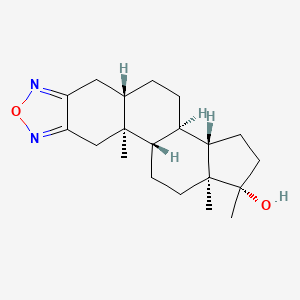
Furazabol
A steroid with a small human excretion study; urinary chemistry does not establish cholesterol or cardiovascular benefits.
Two-person analytical excretion study; evidence checked 2026-10-01
Practical use
Evidence interpretation and concrete review questions
- Identify the promised benefit
- A lipid or heart-health claim needs a relevant clinical study.
- Keep uncertainty visible
- Two people provide limited information about variability.
- Avoid time-based reassurance
- A urine result cannot certify organ recovery or safe exposure.
Overview
Furazabol has a modified heterocyclic steroid structure. The directly reviewed human study identifies the parent compound and a hydroxylated metabolite in urine, rather than testing a clinical treatment goal.
Risks and limitations
Two volunteers cannot establish a useful safety profile. The experiment does not measure liver injury incidence, cardiovascular events or the health effects of repeated use.
How to read this
A measured urinary half-life must not be equated with duration of biological effect, health recovery or a universal detection window.
Research explained
Human urinary metabolism
Who was studied
Two men in a small controlled furazabol excretion experiment, analyzed by gas chromatography–mass spectrometry.
What was found
Furazabol and 16-hydroxyfurazabol were the dominant reported urinary signals; unchanged-compound recovery differed substantially between participants.
What it cannot establish
Analytical pharmacokinetics in two people, not a trial of efficacy, lipid benefit or safety. Only part of the exposure was recovered as unchanged drug.
Read the original studyThe sample is the endpoint
The study describes urine chemistry. It does not demonstrate improved vascular health.
Supporting sourceLow unchanged recovery is not disappearance
Conversion into metabolites and other elimination routes prevent that interpretation.
Supporting sourceClaims versus findings
Incorrect
An excretion study proves the drug is safe once the parent signal falls.
Chemical measurement and ongoing biological effects are different questions.
Check the evidenceCommon questions
Does this paper substantiate a heart-health benefit?
No cardiovascular-benefit endpoint was tested.
SourceSources
PubChem chemical identity; checked October 1, 2026
Sources checked 2026-10-01.
General education; not a personal treatment plan.