

Hormone medicines
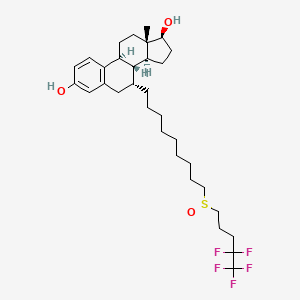
Fulvestrant
An estrogen-receptor-directed cancer medicine whose outcomes are specific to hormone-receptor-positive advanced breast cancer.
Randomized advanced-breast-cancer evidence; selected endocrine-naive population; checked 2026-10-01
Also known as: Faslodex · SERD
Practical use
Clinical purpose, evidence and review questions
- Preserve tumor context
- Keep receptor status, prior therapy and companion treatment with any quoted result.
- Name the outcome
- Distinguish progression, symptoms, overall survival and treatment burden.
- Flag laboratory interference
- Include fulvestrant in medication information accompanying hormone-test interpretation.
Overview
Fulvestrant binds the estrogen receptor and promotes receptor downregulation. US Faslodex has single-agent and specific combination indications in hormone-receptor-positive advanced breast cancer. The tumor’s receptor status, prior endocrine treatment and companion medicines determine the relevant evidence.
Risks and limitations
Concerns include injection-related pain or nerve injury, bleeding in people with bleeding disorders or anticoagulant treatment, increased exposure with liver impairment and fetal harm. It can falsely elevate estradiol results on some immunoassays. A new abnormal hormone result therefore needs laboratory-method review.
How to read this
Cancer control is the clinical goal. Receptor blockade in this setting does not establish a general solution for estradiol management, gynecomastia or post-cycle hormone recovery.
Research explained
FALCON: fulvestrant versus anastrozole
Who was studied
462 postmenopausal women with hormone-receptor-positive locally advanced or metastatic breast cancer and no previous endocrine therapy, randomized double-blind to fulvestrant or anastrozole.
What was found
Median progression-free survival was 16.6 versus 13.8 months; hazard ratio 0.797 (95% CI 0.637–0.999). Joint pain occurred in 17% versus 10%. Adverse-event discontinuation was 7% versus 5%.
What it cannot establish
Progression-free survival is time without measured progression or death, not a cure rate or a demonstrated overall-survival gain. The result does not describe all modern combination strategies.
Read the original studyRead the cancer endpoint literally
A 2.8-month difference between medians does not mean every individual gains 2.8 months, and it is not automatically a lifespan difference.
Supporting sourceA measured estradiol increase can be analytical
Fulvestrant can interfere with some estradiol immunoassays. Tell the clinical team and laboratory about the medicine before interpreting a surprising result.
Supporting sourceClaims versus findings
Not established by this result
A progression-free-survival advantage proves longer overall survival.
The cited primary report’s endpoint is progression-free survival; overall survival requires its own analysis.
Check the evidenceCommon questions
Can a high estradiol immunoassay result be taken at face value?
Not always. The product label specifically warns about falsely high immunoassay readings.
SourceSources
FALCON: fulvestrant versus anastrozole
US prescribing information; checked October 1, 2026
Sources checked 2026-10-01.
General education; not a personal treatment plan.