

Nootropics
Fasoracetam
An investigational racetam whose early ADHD signal was followed by a sponsor-reported failed randomized trial.
Early uncontrolled improvement; later primary endpoint failure
Also known as: NFC-1 · AEVI-001
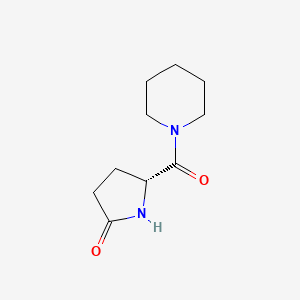
Practical use
Reviewed practical notes
- Read the later result
- A failed confirmatory-style comparison belongs next to an encouraging pilot.
- Check blinding
- A placebo week followed by open treatment cannot control expectations like a parallel blinded trial.
- Avoid genetic certainty
- A research subgroup does not establish a validated test for choosing treatment.
Overview
Fasoracetam was studied in attention-deficit/hyperactivity disorder (ADHD), including patients selected for variants in glutamatergic gene networks. The research names NFC-1 and AEVI-001 are linked to this development history. Genetic selection is a research design, not a proven consumer prescribing test.
Risks and limitations
The early study found no difference in adverse-event incidence between its placebo week and active-treatment weeks. With 30 adolescents and a short, mostly open-label design, that observation cannot establish long-term safety or healthy-adult suitability.
How to read this
The later ASCEND study is important because it tested the promising idea more rigorously and did not meet its primary endpoint, according to the sponsor. Omitting that result would make the early evidence appear stronger than it is.
Research explained
Genetically selected adolescent pilot
Who was studied
30 adolescents aged 12–17 with ADHD and selected mGluR-network variants; a placebo week followed by four weeks of active treatment.
What was found
Symptoms improved over the study, including clinician-rated global measures.
What it cannot establish
The active phase was open-label within a single-blind sequence, not a conventional parallel double-blind placebo comparison. Expectation, time and symptom-driven treatment changes limit causal inference.
Read the original studyASCEND phase 2 results announcement
Who was studied
Children and adolescents with ADHD in a six-week double-blind study across two genomic subgroups.
What was found
The sponsor reported that AEVI-001 did not meet the primary ADHD-rating-scale endpoint in either subgroup.
What it cannot establish
This source is a sponsor announcement filed with the SEC, not a full peer-reviewed trial report. Missing detailed estimates are not supplied here.
Read the original studyThe name connection has a source
The NCATS fasoracetam record includes AEVI-001 and anhydrous NFC-1 names and links a separate monohydrate record. Formulation and hydrate form should remain explicit when connecting chemistry records with trial reports.
Supporting sourceSources
2019 ASCEND sponsor results filed with SEC
Sources checked 2026-10-01.
General education; not a personal treatment plan.