

Androgens
Epiandrosterone
An endogenous steroid metabolite with experimental signaling effects, not demonstrated human neurological or cardiovascular treatment benefit.
Isolated cardiac experiments and mechanistic rat brain-injury research; evidence checked 2026-10-01
Practical use
Evidence interpretation and concrete review questions
- Check where treatment occurred
- Separate human sample analysis from animal intervention.
- Consider other tissues
- A favorable brain endpoint does not resolve cardiac effects.
- Name the exact molecule
- Do not substitute a similarly named steroid when reading a claim.
Overview
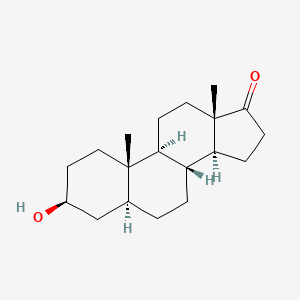
Epiandrosterone is 3β-hydroxy-5α-androstan-17-one. It is distinct from androsterone and from unsaturated 1-androsterone. Its designation as a metabolite does not mean it is biologically inert.
Risks and limitations
Experimental work reduced cardiac contractility and calcium-channel currents. A separate rat neurological study reported benefits, but neither result establishes the balance of benefit and harm when a person takes it.
How to read this
Effects in different tissues can point in different directions. “Neuroprotective” in an injured rat brain is not a broad human wellness claim.
Research explained
Calcium-channel and heart experiments
Who was studied
Isolated-heart, vascular-ring and ventricular-cell experiments.
What was found
Epiandrosterone reduced cardiac contractile measures and reversibly inhibited L-type calcium-channel currents under the experimental conditions.
What it cannot establish
Laboratory concentrations and isolated preparations do not establish a human blood-pressure treatment or predict a clinical adverse-event rate.
Read the original studyBrain-injury mechanism study
Who was studied
Human cerebrospinal-fluid screening followed by mechanistic work and a rat subarachnoid-hemorrhage model.
What was found
The authors identified an OGT-related mechanism and reported reduced neuronal injury with better functional outcomes in treated rats.
What it cannot establish
Human sample discovery was not human treatment; clinical efficacy remains untested by this report.
Read the original studyEndogenous does not mean inert
Direct cell and organ effects deserve evaluation even when a substance normally occurs in metabolism.
Supporting sourceHuman discovery is not human treatment
The intervention outcomes were in rats, not a clinical trial of patients with hemorrhage.
Supporting sourceClaims versus findings
Not established
A neuroprotection paper establishes a brain-health supplement.
The therapeutic experiment used an acute rat injury model.
Check the evidenceCommon questions
Is epiandrosterone the same as 1-androsterone?
No. Their double-bond structures differ.
SourceSources
Calcium-channel and heart experiments
PubChem chemical identity; checked October 1, 2026
Sources checked 2026-10-01.
General education; not a personal treatment plan.