

Androgens
1-Androsterone
A steroid precursor with a small human training trial showing gains alongside substantial adverse changes in blood markers.
Small randomized training study plus analytical human metabolism; evidence checked 2026-10-01
Also known as: 1-DHEA
Practical use
Evidence interpretation and concrete review questions
- Check the full identity
- Match the systematic name on a claim to the compound actually tested.
- Include adverse outcomes
- Compare lipid and organ-related findings with strength and body-composition changes.
- Bring the package to care
- If an exposure needs medical review, preserve the ingredient label, lot and symptom timeline.
Overview
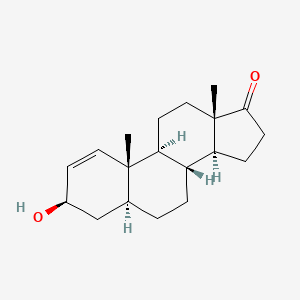
The studied identity is 3β-hydroxy-5α-androst-1-en-17-one, sometimes called 1-DHEA. It is distinct from ordinary DHEA and from 1-testosterone. Chemical analysis and a volunteer excretion study documented conversion to several steroids, including 1-testosterone.
Risks and limitations
The training study found lower HDL, higher LDL and changes in liver- and kidney-related markers. These are warning signals, although individual blood tests do not by themselves establish permanent organ damage.
How to read this
A measurable performance effect does not establish an acceptable benefit–harm balance. Read the unfavorable laboratory findings beside the training result.
Research explained
Four-week training study
Who was studied
17 resistance-trained men analyzed: nine in the prohormone group and eight receiving placebo during structured training.
What was found
Lean mass increased 6.3% versus 0.5%; squat strength increased 14.3% versus 5.7%. In the active group HDL fell about 39% and LDL rose about 33%; several other clinical markers worsened.
What it cannot establish
Small, short study. Hydrodensitometry estimates lean mass, not new contractile muscle directly; long-term clinical outcomes were not measured.
Read the original studyIdentity before extrapolation
A separate analysis confirmed the seized product’s chemical identity and detected 1-testosterone among metabolites in one volunteer. That does not authenticate another brand.
Supporting sourceRead both sides of the result
Improved lifting performance coexisted with adverse lipid changes; the study cannot support a general claim of healthy muscle gain.
Supporting sourceClaims versus findings
Unsupported
Calling it a prohormone makes it a mild nutritional ingredient.
Its human metabolism involved active steroids, and the training trial documented adverse biochemical changes.
Check the evidenceCommon questions
Is 1-DHEA the same as DHEA?
No. The double-bond position and ring configuration differ; evidence cannot be transferred by the similar name.
SourceSources
PubChem chemical identity; checked October 1, 2026
Additional primary or official source
Sources checked 2026-10-01.
General education; not a personal treatment plan.