

Hormone medicines
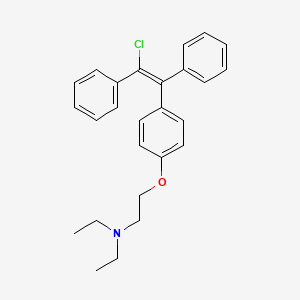
Enclomiphene
A clomiphene isomer studied for secondary male hypogonadism, with hormone and sperm-concentration outcomes rather than proven pregnancy outcomes.
Human research / selected populations
Also known as: enclomiphene citrate
Practical use
Applying the explained evidence
- Where it fits
- A clomiphene isomer studied for secondary male hypogonadism, with hormone and sperm-concentration outcomes rather than proven pregnancy outcomes.
- Put the information into practice
- Distinguish clinical symptoms, hormone concentrations, semen parameters and actual pregnancy outcomes. These are related but separate endpoints.
- Diagnosis before a number
- Write down the symptoms, the reason a test was ordered, and the medicines already used. An isolated hormone result is a question to interpret, not a stand-alone reason to add another medicine.
- Keep this limit in view
- The reported endpoints do not establish pregnancy or live-birth benefit, long-term safety, or effectiveness after every type of nonmedical androgen exposure.
Overview
Enclomiphene has been studied as a way to stimulate the hypothalamic–pituitary–testicular axis in selected men with secondary hypogonadism. Its trials ask a different question from simply supplying external testosterone.
Risks and limitations
Small or short trials cannot establish the rate of uncommon adverse effects or safety across all causes of low testosterone. A sperm-concentration result is not proof of fertility for an individual.
How to read this
Distinguish clinical symptoms, hormone concentrations, semen parameters and actual pregnancy outcomes. These are related but separate endpoints.
Research explained
Two phase III comparisons
Who was studied
Overweight men aged 18–60 with secondary hypogonadism in two randomized double-blind double-dummy trials; hormone and semen endpoints assessed over 16 weeks.
What was found
Testosterone rose in active-treatment groups. LH and FSH rose with enclomiphene but fell with testosterone gel. Sperm concentrations were maintained with enclomiphene and were reduced with gel.
What it cannot establish
The reported endpoints do not establish pregnancy or live-birth benefit, long-term safety, or effectiveness after every type of nonmedical androgen exposure.
Read the original studyEarly proof-of-principle trial
Who was studied
12 men with secondary hypogonadism previously treated with topical testosterone; randomized open-label active comparison.
What was found
All seven enclomiphene participants evaluated at three months, and all six evaluated at six months, showed increased sperm counts. Gonadotropins increased in the enclomiphene group.
What it cannot establish
Very small groups, incomplete later follow-up and open-label design. The indexed abstract’s testosterone unit is inconsistent with common clinical reporting, so this article does not reproduce those values as a verified numerical reference.
Read the original studyWhat “preserves sperm” does and does not establish
A group’s sperm concentration can be maintained while other determinants of conception remain unmeasured. The phase III comparison is useful for distinguishing endocrine effects from those of testosterone gel, but it should not be turned into a guarantee about becoming a parent.
Supporting sourceSources
Early proof-of-principle trial
Sources checked 2026-09-28.
General education; not a personal treatment plan.