

Androgens
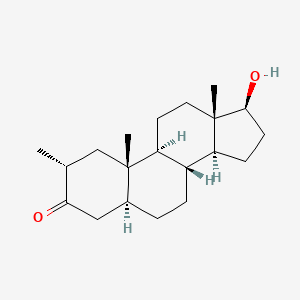
Drostanolone
An androgen with historical breast-cancer treatment evidence that does not establish a general estrogen-control role.
Historical controlled clinical comparison; evidence checked 2026-10-01
Also known as: Dromostanolone
Practical use
Evidence interpretation and concrete review questions
- Read the complete treatment
- Record companion drugs and the timing of outcome assessment.
- Distinguish endpoint types
- Remission, survival and symptom relief are different outcomes.
- Avoid indication transfer
- A historical oncology result does not answer a physique or ancillary-drug question.
Overview
Drostanolone is a distinct steroid commonly encountered in ester forms such as drostanolone propionate. The old clinical literature concerns cancer treatment, with different formulations and companion therapies that must remain attached to the findings.
Risks and limitations
The small historical comparisons are not comprehensive safety studies. A tumor response in advanced disease supplies no favorable risk assessment for an otherwise healthy person.
How to read this
An anticancer treatment history does not automatically imply direct aromatase inhibition or a practical role for managing another drug’s hormone effects.
Research explained
Three-agent comparison in advanced breast cancer
Who was studied
91 patients in a controlled comparison of drostanolone, nandrolone and testololactone; cyclophosphamide was added during the later observation interval.
What was found
No efficacy difference between the three drugs was reported. Average remission proportions were 24% initially and 46% after the later combined-treatment interval.
What it cannot establish
Later responses cannot be attributed to drostanolone alone. The abstract does not establish a modern survival advantage or current treatment ranking.
Read the original studyKeep co-treatment in the story
Adding cyclophosphamide changes what the later response rate represents.
Supporting sourceFormulation is part of identity
The parent steroid and an ester are related but not identical exposure descriptions.
Supporting sourceClaims versus findings
Incorrect
The historical remission rate proves drostanolone alone caused every response.
The later assessment included additional chemotherapy and multiple treatment arms.
Check the evidenceCommon questions
Does the cancer trial prove an aromatase-inhibitor effect?
No. Its clinical comparison did not establish that mechanism or a general hormone-management use.
SourceLearn with Avery
Sources
Three-agent comparison in advanced breast cancer
PubChem chemical identity; checked October 1, 2026
Sources checked 2026-10-01.
General education; not a personal treatment plan.