

Androgens
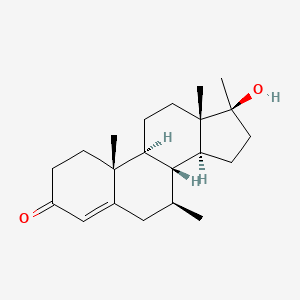
Calusterone
A distinct dimethyltestosterone studied historically in advanced breast cancer, with evidence far narrower than general hormone-management claims.
Historical uncontrolled clinical series and a small metabolic study; evidence checked 2026-10-01
Practical use
Evidence interpretation and concrete review questions
- Keep the clinical setting
- Include metastatic disease and menopausal or ovarian status.
- Demand the relevant endpoint
- Separate response, symptoms and survival.
- Check current care independently
- An old study is historical evidence, not a present-day prescribing pathway.
Palliative breast-cancer series
Overview
Calusterone is 7β,17α-dimethyltestosterone. Historical reports used it in postmenopausal metastatic breast cancer. Its stereochemistry differs from bolasterone, and an old cancer-treatment report does not establish a current indication in every jurisdiction.
Risks and limitations
A small historical report describing good tolerability cannot exclude uncommon toxicity. Cancer response, endocrine changes and adverse effects require separate assessment; these reports supply no reassurance for healthy users.
How to read this
The useful question is what the original cancer population and treatment endpoint can actually support.
Research explained
Palliative breast-cancer series
Who was studied
Sixty postmenopausal patients with metastatic breast carcinoma treated for at least three months in a historical clinical series.
What was found
The report described responses in 17 of 60 patients, approximately 28%.
What it cannot establish
No randomized comparator is described in the abstract. Response is not proof of improved survival or contemporary comparative effectiveness.
Read the original studyEstrogen metabolism during treatment
Who was studied
Five women with breast cancer studied before and after calusterone therapy.
What was found
Estrogen-metabolite patterns changed; reduced estrogen production was observed in the three ovariectomized participants, not the two postmenopausal participants.
What it cannot establish
Extremely small mechanistic study; changes cannot be generalized to all women or men.
Read the original studyA response proportion needs its definition
Tumor response should not be restated as a cure or survival benefit.
Supporting sourceAn endocrine effect can vary by setting
The five-person report did not show the same production-rate change in both subgroups.
Supporting sourceClaims versus findings
Not established
Historical breast-cancer use proves a universal estrogen-lowering role.
The selected evidence concerns specific cancer populations and variable metabolic findings.
Check the evidenceCommon questions
Is calusterone another spelling of bolasterone?
No. Their position-seven configurations differ.
SourceSources
Palliative breast-cancer series
Estrogen metabolism during treatment
PubChem chemical identity; checked October 1, 2026
Sources checked 2026-10-01.
General education; not a personal treatment plan.