

Performance supplements
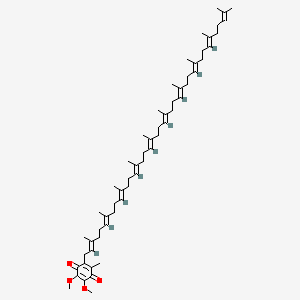
Coenzyme Q10
A compound involved in cellular energy production. Exercise studies give mixed results, so more CoQ10 in blood is not proof of better performance.
Human exercise trials with mixed findings
Also known as: CoQ10 · ubiquinone · ubiquinol
Practical use
Reviewed practical notes
- Define success first
- Choose an outcome relevant to your training. A higher supplement concentration in blood is a different result.
- Compare like with like
- Record the formulation and keep the training comparison visible when interpreting a study.
- Check the medication context
- Have potential interactions reviewed before adding CoQ10 to an existing medication routine.
Overview
CoQ10 participates in mitochondrial energy transfer. Ubiquinone and ubiquinol are different forms; a result with one preparation cannot establish the same result for every product.
Risks and limitations
Digestive upset and insomnia can occur. CoQ10 can interact with warfarin and insulin and may be unsuitable with some cancer treatments. A supplement label does not resolve those interactions.
How to read this
Match the product and the performance test to the claim. Separate improvement from training itself from any additional improvement compared with placebo.
Research explained
A short study with an uncertain endurance result
Who was studied
41 trained and untrained men and women; randomized placebo comparison for 14 days.
What was found
Blood CoQ10 increased. The time-to-exhaustion result was a statistical trend (P=0.06), rather than meeting the study’s 0.05 threshold.
What it cannot establish
Short follow-up, mixed training backgrounds and one preparation. This result alone does not establish a reliable endurance benefit.
Read the original studyUbiquinol alongside six weeks of athletic training
Who was studied
100 young German trained athletes, randomized to ubiquinol or placebo.
What was found
Both groups improved on the cycling-ergometer assessment. The additional improvement with ubiquinol was 0.08 W/kg compared with placebo (P<0.03).
What it cannot establish
Participants continued individual training. The specified cycling endpoint is not a measurement of muscle gain or a guaranteed improvement in every sport.
Read the original studyRead the comparison, not just the before-and-after
The athlete study reported improvement in both groups. Attributing the entire change in the supplement group to ubiquinol would overstate its measured contribution.
Supporting sourceSources
Sources checked 2026-10-01.
General education; not a personal treatment plan.