

Performance supplements
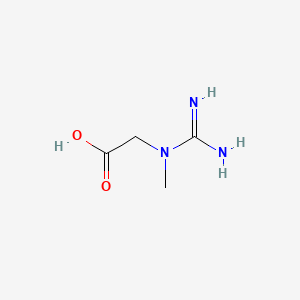
Creatine
A compound involved in cellular energy buffering, with resistance-training evidence and a separate, developing cognitive research literature.
Human trials / outcome-specific evidence
Also known as: creatine monohydrate
Practical use
Applying the explained evidence
- Where it fits
- A compound involved in cellular energy buffering, with resistance-training evidence and a separate, developing cognitive research literature.
- Put the information into practice
- Fat-free mass includes water and other non-fat tissue; it is not synonymous with newly built contractile muscle. Training status, exercise exposure and study duration all change what a result means.
- Connect evidence to your training
- Specify the outcome you want to improve and a repeatable way to measure it. Check whether the study participants, activity and product match the claim; avoid crediting one supplement for changes made alongside several training or diet changes.
- Keep this limit in view
- The changes occurred alongside training. These small-group averages are not guaranteed individual gains, and fat-free mass is not pure muscle.
Overview
Creatine participates in the phosphocreatine energy system. Its training studies and brain studies ask different questions: increasing muscle training adaptations does not automatically establish a cognitive benefit in every setting.
Risks and limitations
The kidney study below found no significant treatment-versus-placebo differences in its measured renal markers after 35 days in healthy young men. This is not a guarantee for people with kidney disease. Creatine-related changes in creatinine can complicate interpretation of creatinine-based kidney estimates.
How to read this
Fat-free mass includes water and other non-fat tissue; it is not synonymous with newly built contractile muscle. Training status, exercise exposure and study duration all change what a result means.
Research explained
Resistance training over twelve weeks
Who was studied
19 resistance-trained men randomized to creatine (10) or placebo (9), both following periodized heavy training.
- Bench-press change · creatine + training
- 24 % from baseline
- Bench-press change · placebo + training
- 16 % from baseline
What was found
Fat-free mass rose 6.3% versus 3.1%. Bench-press strength increased 24% versus 16%, and squat strength 32% versus 24%. Muscle-biopsy fiber-area changes also favored creatine.
What it cannot establish
The changes occurred alongside training. These small-group averages are not guaranteed individual gains, and fat-free mass is not pure muscle.
Read the original studyCognition during sleep deprivation
Who was studied
15 participants in a randomized crossover experiment involving approximately 21 hours of sleep deprivation.
What was found
The study reported changes in brain high-energy phosphates and improved performance on selected cognitive and processing-speed tasks under the experimental condition.
What it cannot establish
The experiment involved acute sleep loss and an unusual research exposure. It does not establish a replacement for sleep or a general intelligence benefit in rested people.
Read the original studyRenal biomarkers over thirty-five days
Who was studied
36 healthy, active male university students randomized to placebo or one of two creatine groups.
What was found
No significant between-group differences were found in conventional kidney tests or the measured KIM-1 and MCP-1 biomarkers. Within active groups, creatinine increased and estimated filtration fell, while values remained within reference ranges.
What it cannot establish
The short study concerns healthy young men. Creatinine-based estimates can shift with creatine metabolism, but an abnormal result should not automatically be dismissed as supplementation.
Read the original studyInterpreting creatinine while using creatine
Creatinine is a breakdown product related to creatine metabolism. A filtration estimate calculated from creatinine can therefore change without proving a new kidney injury. The cited trial paired ordinary tests with additional injury markers; interpretation in an individual still requires their full clinical context.
Supporting sourceTraining benefit and cognitive benefit are separate claims
The sleep-deprivation experiment used spectroscopy and cognitive tasks, not a muscle-training program. Its findings are useful evidence for a specific stress condition, but do not establish equal effects across ages, sleep states or cognitive disorders.
Supporting sourceSources
Resistance training over twelve weeks
Cognition during sleep deprivation
Renal biomarkers over thirty-five days
Sources checked 2026-09-28.
General education; not a personal treatment plan.