

Metabolic medicines
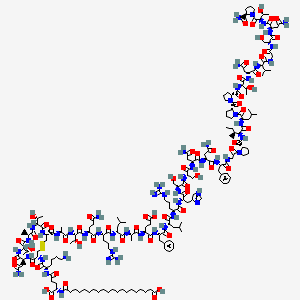
Cagrilintide
A long-acting amylin analogue: monotherapy findings must be distinguished from CagriSema combination trials.
Human clinical research
Practical use
Applying the explained evidence
- Where it fits
- A long-acting amylin analogue: monotherapy findings must be distinguished from CagriSema combination trials.
- Put the information into practice
- A favorable average weight change does not establish tolerability for an individual. Check whether a quoted result concerns cagrilintide alone, CagriSema, or another amylin medicine.
- The outcome being treated
- Identify whether the evidence concerns a diagnosed condition, body weight, appetite or a laboratory marker. Check which outcomes were measured and over what follow-up before transferring a finding to another goal.
- Keep this limit in view
- The main reported analysis assumed treatment adherence; a separate treatment-policy analysis was also conducted. Different active treatments were not fully blinded to one another.
Renal and hepatic impairment: single-administration pharmacokinetics
Overview
Cagrilintide acts through amylin signaling, a satiety-related pathway. A trial of cagrilintide alone and a trial combining it with semaglutide evaluate different interventions.
Risks and limitations
In the 26-week trial, gastrointestinal events occurred in 41–63% across active groups versus 32% with placebo; nausea occurred in 20–47% versus 18%. Administration-site reactions were also reported.
How to read this
A favorable average weight change does not establish tolerability for an individual. Check whether a quoted result concerns cagrilintide alone, CagriSema, or another amylin medicine.
Research explained
Phase II monotherapy trial
Who was studied
706 adults without diabetes, with obesity or overweight plus a qualifying condition; 26 weeks of treatment, followed by six weeks off treatment.
- Highest active-group mean change
- -10.8 %
- Placebo mean change
- -3 %
What was found
Mean weight reduction was 6.0–10.8% across cagrilintide groups versus 3.0% with placebo. The highest active-group mean exceeded the liraglutide comparison: 10.8% versus 9.0%, estimated difference 1.8 percentage points.
What it cannot establish
The main reported analysis assumed treatment adherence; a separate treatment-policy analysis was also conducted. Different active treatments were not fully blinded to one another.
Read the original studyRenal and hepatic impairment: single-administration pharmacokinetics
Who was studied
33 participants in the renal-function study and 32 in the liver-function study, divided into normal, mild, moderate and severe impairment groups.
What was found
Mean total-exposure ratios versus normal function were 1.23, 1.18 and 1.21 for renal impairment, and 0.99, 1.01 and 1.11 for hepatic impairment. Investigators found no consistent clinically relevant pattern.
What it cannot establish
The severe-impairment subgroups contained only five and four people. Single-administration studies do not establish long-term safety across every organ-disease setting.
Read the original studyExposure ratios are not percentages of people harmed
An AUC ratio of 1.21 describes average drug exposure relative to the comparison group. It does not mean 21% of participants experienced an adverse effect. The study’s 90% confidence interval for that renal comparison was 0.87–1.68, showing substantial uncertainty around the estimate.
Supporting sourceSources
Renal and hepatic impairment: single-administration pharmacokinetics
Sources checked 2026-09-28.
General education; not a personal treatment plan.