

SARMs
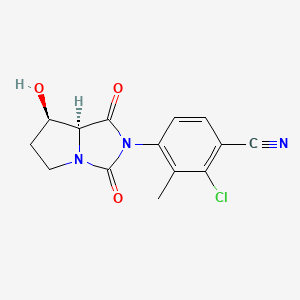
BMS-564929
An experimental SARM with strong muscle-versus-prostate selectivity in rats; the discovery paper does not establish a human safety advantage.
Receptor, structural and rat studies; no human outcome result in the cited discovery report
Practical use
Evidence interpretation and clinical context
- Keep potency tied to its assay
- Identify the animal tissue used in a potency comparison.
- Separate development from results
- Entering a clinical program and demonstrating clinical benefit are different milestones.
- Keep the unresolved outcomes visible
- A prostate-weight result cannot answer fertility, cardiovascular or long-term cancer questions.
Overview
BMS-564929 activates the androgen receptor and was designed to separate anabolic effects from reproductive-tissue stimulation. The published discovery work combines receptor experiments, structural analysis and castrated-rat pharmacology.
Risks and limitations
Reduced prostate stimulation in a rat experiment does not address every consequence of androgen signaling. The source does not establish long-term cardiovascular, liver, fertility or cancer outcomes in patients.
How to read this
Potency means the amount needed to produce a measured effect in a test system. It does not mean greater clinical benefit, and comparisons across different assay endpoints can be misleading.
Research explained
Pharmacological and x-ray structural characterization of a novel selective androgen receptor modulator: potent hyperanabolic stimulation of skeletal muscle with hypostimulation of prostate in rats.
Who was studied
Receptor assays, X-ray structural work and castrated male-rat studies.
What was found
BMS-564929 stimulated levator ani muscle growth more potently than testosterone in the model, with less prostate stimulation relative to its muscle effect.
What it cannot establish
The paper describes advancement to clinical development but reports preclinical findings. That statement is not a published demonstration of human benefit or safety.
Read the original studyRegulatory status
FDA states that SARMs are unapproved drugs, not dietary supplements.
Supporting sourceWhat the structural work adds
The receptor structures suggested a basis for different tissue responses. A structural explanation is useful for drug discovery but cannot substitute for clinical outcomes.
Supporting sourceClaims versus findings
Not established
Muscle selectivity removes androgen-related risk.
The study measured selected tissues and molecular interactions, not the full range of long-term human harms.
Check the evidenceCommon questions
Was the reported hyperanabolic effect observed in people?
The reported effect was observed in the rat model. The publication’s clinical-development language does not turn it into a human outcome trial.
SourceSources
Regulatory status — primary or official source
Sources checked 2026-10-01.
General education; not a personal treatment plan.