

Androgens
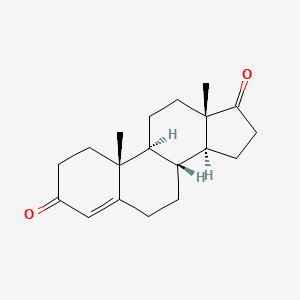
Androstenedione
A steroid precursor that failed to add training gains in a controlled study of men with normal testosterone.
Randomized resistance-training evidence in men with normal testosterone; evidence checked 2026-10-01
Also known as: Androst-4-ene-3,17-dione
Practical use
Evidence interpretation and concrete review questions
- Look for the control group
- Training itself changes strength; compare between groups.
- Keep population boundaries
- Distinguish normal hormone status from a diagnosed deficiency.
- Review the whole hormone profile
- A single desired marker can miss other clinically relevant shifts.
Overview
Androstenedione is a precursor in sex-steroid synthesis. More precursor does not guarantee a sustained rise in testosterone or better muscle adaptation, because metabolism and endocrine feedback influence the result.
Risks and limitations
The cited trial found increases in estrogen-related hormones and a reduction in HDL cholesterol. These biochemical changes undermine a claim that it is a neutral nutritional shortcut.
How to read this
This is a useful example of why a plausible biochemical pathway needs a controlled outcome study.
Research explained
Eight-week resistance-training experiment
Who was studied
Thirty healthy men aged 19–29 participated overall; twenty entered the training comparison, ten receiving androstenedione and ten placebo. Ten others underwent an acute hormone assessment.
What was found
Free and total testosterone did not rise significantly. Strength, muscle-fiber size and body-composition adaptations did not exceed placebo. Estrogen measures rose and HDL decreased in the active group.
What it cannot establish
Small study in initially untrained men with normal testosterone; it does not answer every endocrine diagnosis or formulation question.
Read the original studyCount the actual randomized comparison
Thirty participated overall, but the sustained training comparison contained twenty.
Supporting sourceA precursor is not a guaranteed destination
The observed hormone pattern included estrogen increases without the promised testosterone response.
Supporting sourceClaims versus findings
Contradicted in this study
Being upstream of testosterone guarantees more testosterone and muscle.
The expected hormonal and training advantages were not observed.
Check the evidenceCommon questions
Is the HDL change proof that someone had a heart attack?
No. It is an adverse risk-marker change, not a measured cardiovascular event.
SourceSources
Eight-week resistance-training experiment
PubChem chemical identity; checked October 1, 2026
Sources checked 2026-10-01.
General education; not a personal treatment plan.