

Growth hormone
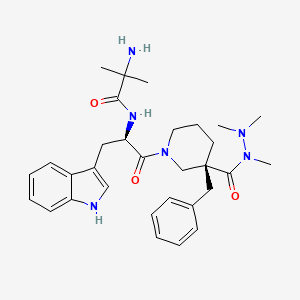
Anamorelin
A ghrelin-receptor medicine with cancer-cachexia evidence for lean mass, but inconsistent effects on strength and a country-specific approval history.
Large cancer-cachexia trials plus a small osteosarcopenia pilot; mass and function differ
Also known as: Adlumiz · ONO-7643
Practical use
Evidence interpretation and clinical context
- Keep the population attached
- When quoting a result, identify whether it came from advanced cancer or the 26-person osteosarcopenia pilot.
- Read both co-primary outcomes
- Place the mass result beside the handgrip result rather than reporting only the favorable endpoint.
- Verify the jurisdiction and indication
- A foreign approval should be described with its country, product and disease indication.
Effect of Anamorelin, a Ghrelin Receptor Agonist, on Muscle and Bone in Adults With Osteosarcopenia.
Japanese approval — primary or official source
Why a positive trial headline needs qualification — primary or official source
Overview
Anamorelin is a small-molecule ghrelin-receptor agonist. It can stimulate appetite and growth-hormone signaling. Its cancer-cachexia research addresses involuntary wasting during serious illness, which differs substantially from gaining muscle in a healthy trainee.
Risks and limitations
Hyperglycemia occurred in the cancer trials. The Japanese regulatory review also addresses cardiac conduction effects and interactions. A small average gain in lean mass does not establish that the benefit outweighs these risks for a different population.
How to read this
Cachexia combines disease-related metabolic changes with loss of tissue and function. Appetite, body weight, lean mass and strength are separate outcomes; an intervention can change one without improving the others.
Research explained
Anamorelin in patients with non-small-cell lung cancer and cachexia (ROMANA 1 and ROMANA 2): results from two randomised, double-blind, phase 3 trials.
Who was studied
Two placebo-controlled phase 3 trials enrolled 979 adults with advanced non-small-cell lung cancer and cachexia; outcomes were assessed over 12 weeks.
What was found
Median lean-mass change was +0.99 versus −0.47 kg in ROMANA 1 and +0.65 versus −0.98 kg in ROMANA 2. Neither trial demonstrated a significant handgrip-strength benefit.
What it cannot establish
The participants had advanced cancer. Lean mass is not a direct measure of contractile muscle or physical independence, and these results do not establish healthy-user hypertrophy.
Read the original studyEffect of Anamorelin, a Ghrelin Receptor Agonist, on Muscle and Bone in Adults With Osteosarcopenia.
Who was studied
A one-year randomized pilot in 26 adults aged at least 50 with osteosarcopenia.
What was found
Muscle mass, lean mass and bone density did not significantly improve. One knee-flexion measure and a bone-formation marker improved.
What it cannot establish
The small sample and multiple measurements make the positive signals preliminary. A bone-turnover marker is not a fracture outcome.
Read the original studyJapanese approval
PMDA’s approved-drug list records Adlumiz approval in January 2021. Its review concerns cachexia associated with specified lung and gastrointestinal cancers, rather than aging or bodybuilding.
Supporting sourceWhy a positive trial headline needs qualification
EMA confirmed refusal of the Adlumiz application in 2017. The regulatory history illustrates why evidence for body composition alone does not settle overall clinical benefit.
Supporting sourceClaims versus findings
Not supported
More lean mass proves more strength.
ROMANA improved lean mass without a significant handgrip advantage.
Check the evidenceCommon questions
Did the older-adult pilot reproduce the cancer mass result?
No significant muscle- or lean-mass effect was found in that small pilot; its strength and bone-marker signals require confirmation.
SourceSources
Effect of Anamorelin, a Ghrelin Receptor Agonist, on Muscle and Bone in Adults With Osteosarcopenia.
Japanese approval — primary or official source
Why a positive trial headline needs qualification — primary or official source
Sources checked 2026-10-01.
General education; not a personal treatment plan.