

Nootropics
Urolithin A
A gut-microbiome-derived metabolite studied for mitochondrial quality control and muscle function, with positive secondary findings but mixed primary outcomes.
Human trials / outcome-specific evidence
Also known as: UA
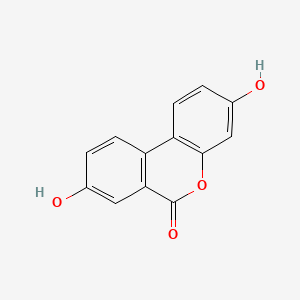
Practical use
Applying the explained evidence
- Where it fits
- A gut-microbiome-derived metabolite studied for mitochondrial quality control and muscle function, with positive secondary findings but mixed primary outcomes.
- Put the information into practice
- The strongest interpretation preserves the endpoint hierarchy. A positive fatigue test and a nonsignificant walking test can both be true. Reporting only the positive result would give an incomplete picture.
- Make the claim measurable
- Specify the claimed effect: alertness, memory, attention or another outcome. Check whether researchers measured that outcome directly; a mechanism or a subjective feeling is a different kind of evidence.
- Keep this limit in view
- The older-adult experiment did not significantly improve its primary ATP-production measure. Its positive endurance findings deserve attention without erasing the negative primary result.
Overview
Urolithin A has been investigated as a way to influence mitophagy: the recycling of damaged mitochondria. Human studies measure muscle performance and biomarkers; these do not establish longer human lifespan.
Risks and limitations
In the 66-person older-adult trial, adverse events did not differ statistically between groups. A four-month trial cannot rule out uncommon or long-latency harms, and its findings do not automatically apply to people with different diseases or medication combinations.
How to read this
The strongest interpretation preserves the endpoint hierarchy. A positive fatigue test and a nonsignificant walking test can both be true. Reporting only the positive result would give an incomplete picture.
Research explained
Older adults: endurance improved, primary measures did not
Who was studied
66 adults aged 65–90, randomized 33 per group for four months; mean age 71.7, predominantly women, all White.
What was found
At two months, hand-muscle contractions to fatigue increased by 95.3 on average versus 11.6 with placebo; leg-muscle increases were 41.4 versus 5.7. Four-month walking-distance changes were 60.8 versus 42.5 metres, but the between-group result was not significant. Maximum ATP production also did not significantly improve.
What it cannot establish
Endurance was a secondary outcome. The large variation between individuals and restricted sample limit generalization to trained athletes. Biomarker changes do not establish prevention of disease.
Read the original studyMiddle-aged adults: strength and exercise measurements
Who was studied
88 middle-aged, untrained adults with overweight entered a four-month randomized trial; 79 completed it.
What was found
Leg-strength comparisons favored the active groups. Peak power, the primary outcome, did not significantly improve. In the higher-exposure group, peak oxygen uptake improved from baseline but the comparison with placebo was P=.058.
What it cannot establish
A change within the active group is not the same as a significant treatment-versus-placebo effect. Several authors disclosed employment, advisory or ownership relationships with the manufacturer.
Read the original studyWhy a promising mechanism is not a longevity result
The middle-aged trial examined molecular signatures and physical performance. These help test a mitochondrial hypothesis, but neither a blood biomarker nor a short-term strength change is a measurement of lifespan. The mechanism and the clinical claim need their own evidence.
Supporting sourceClaims versus findings
Not supported
Improves every measure of mitochondrial performance
The older-adult experiment did not significantly improve its primary ATP-production measure. Its positive endurance findings deserve attention without erasing the negative primary result.
Check the evidenceSources
Older adults: endurance improved, primary measures did not
Middle-aged adults: strength and exercise measurements
Sources checked 2026-09-28.
General education; not a personal treatment plan.