

Androgens
Trestolone
An investigational androgen studied for male contraception; human implants suppressed sperm production but exposed important delivery and safety limitations.
Human evidence / important limitations
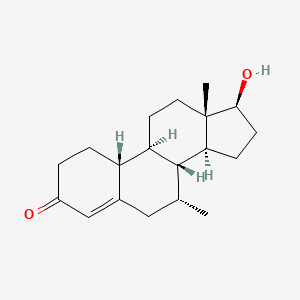
Also known as: MENT · 7alpha-methyl-19-nortestosterone
Practical use
Applying the explained evidence
- Where it fits
- An investigational androgen studied for male contraception; human implants suppressed sperm production but exposed important delivery and safety limitations.
- Put the information into practice
- Contraceptive research measures sperm suppression and its persistence. It does not supply a physique-gain forecast or prove reliable contraception for an individual.
- Formulation and purpose
- Write down the exact compound and formulation behind a claim. Compare the studied population and purpose with the situation being discussed; evidence for medical replacement does not automatically answer a physique-enhancement question.
- Keep this limit in view
- Suppression was not uniform. The results describe research implants and cannot establish a dependable home contraceptive method.
Overview
MENT is resistant to 5-alpha reduction. The clinical work below used sustained-release implants, a delivery system that cannot be assumed equivalent to other preparations sold under the same molecule’s name.
Risks and limitations
Clinical experiments reported increased red-cell measures and hemoglobin, reduced HDL in one study, and strong reproductive-axis suppression. Resistance to 5-alpha reduction does not mean freedom from androgen-related adverse effects.
How to read this
Contraceptive research measures sperm suppression and its persistence. It does not supply a physique-gain forecast or prove reliable contraception for an individual.
Research explained
MENT implant study
Who was studied
35 volunteers randomized among three implant groups across three clinics, with treatment extended up to twelve months in some groups.
What was found
Testosterone, LH and FSH fell. In the highest implant group, eight participants reached azoospermia, but nonresponders were also reported. Red-cell counts, hematocrit and hemoglobin increased; these changes were reversible in the study.
What it cannot establish
Suppression was not uniform. The results describe research implants and cannot establish a dependable home contraceptive method.
Read the original studyComparison with testosterone, both with a progestogen
Who was studied
29 healthy men recruited for a study lasting up to 48 weeks.
What was found
At twelve weeks, sperm concentrations were below one million/mL in 8 of 10 assessed MENT participants and 13 of 16 testosterone participants. Later MENT suppression was not maintained as implant release declined; six men reported loss of libido. Hemoglobin increased and HDL fell in both groups.
What it cannot establish
Both arms included another hormonal agent. Outcomes cannot be assigned to MENT alone, and changing delivery over time affected efficacy.
Read the original studyDelivery stability is part of the evidence
In the comparative trial, the early sperm-suppression response did not persist when MENT release declined. This is a useful example of why receptor activity alone cannot predict the success of a finished pharmaceutical product.
Supporting sourceSources
Comparison with testosterone, both with a progestogen
Sources checked 2026-09-28.
General education; not a personal treatment plan.