

Hormone medicines
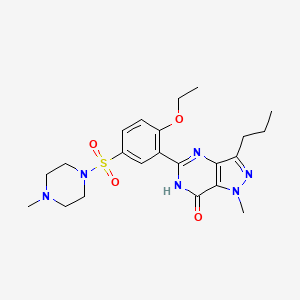
Sildenafil
A PDE5 inhibitor for erectile dysfunction; its short-term clinical response does not establish performance enhancement or freedom from interaction risk.
Randomized erectile-dysfunction evidence
Practical use
Applying the explained evidence
- Where it fits
- A PDE5 inhibitor for erectile dysfunction; its short-term clinical response does not establish performance enhancement or freedom from interaction risk.
- Put the information into practice
- The strongest data below involve men with erectile dysfunction. Improvement during treatment does not prove correction of an endocrine cause, and no muscle-gain or cycle-safety outcome was measured.
- Diagnosis before a number
- Write down the symptoms, the reason a test was ordered, and the medicines already used. An isolated hormone result is a question to interpret, not a stand-alone reason to add another medicine.
- Keep this limit in view
- This counts attempts in a specified period, not the percentage of men responding or an individual forecast.
Overview
Sildenafil enhances the nitric-oxide/cGMP response by inhibiting PDE5. Viagra is a US-approved erectile-dysfunction medicine. It facilitates the response to sexual stimulation rather than directly increasing testosterone or establishing the cause of erectile symptoms.
Risks and limitations
Nitrates, organic nitrites and riociguat are contraindicated. Other blood-pressure-lowering medicines and CYP3A4 inhibitors can alter risk. Headache, flushing, dyspepsia and visual disturbance occur; chest pain, sudden vision/hearing loss or an erection over four hours warrants urgent assessment.
How to read this
The strongest data below involve men with erectile dysfunction. Improvement during treatment does not prove correction of an endocrine cause, and no muscle-gain or cycle-safety outcome was measured.
Research explained
Two distinct pivotal trials
Who was studied
532 men in a 24-week fixed-arm trial; 329 different men in a 12-week flexible-treatment trial.
- Successful attempts: sildenafil
- 69 %
- Successful attempts: placebo
- 22 %
What was found
During the last four weeks of the flexible trial, 69% of intercourse attempts succeeded with sildenafil versus 22% with placebo. In the separate fixed-arm trial, the highest studied arm’s erection-achievement score rose from 2.0 to 4.0 on a 5-point scale.
What it cannot establish
Separate populations and endpoints; neither trial measures muscle growth or cycle safety.
Read the original studyTwo trials, two different questions
Fixed treatment levels and flexible adjustment answer different questions. Their outcome percentages should not be pooled into one success rate.
Supporting sourceMechanism does not resolve diagnosis
Relief of an erectile symptom does not identify whether its cause was vascular, psychological or hormonal.
Supporting sourceExposure and interaction context
The label reports an approximately 4 hour terminal half-life. Food, organ function and interacting medicines can change exposure; that number is not a guaranteed clearance time or a self-selected nitrate interval.
Supporting sourceWhat visual symptoms mean
Transient visual disturbance is a reported adverse effect, but sudden vision loss needs prompt medical evaluation. Treating every visual complaint as an ordinary expected effect would erase that important distinction.
Supporting sourceWhat comparison can and cannot do
Different populations and endpoints prevent ranking these drugs from separate placebo-controlled percentages.
Supporting sourceWhat the evidence does not quantify
Muscle gain and prevention of harm from other drugs were not measured.
Supporting sourceClaims versus findings
Not established
A 69% trial response means I have a 69% chance of success.
This counts attempts in a specified period, not the percentage of men responding or an individual forecast.
Check the evidenceCommon questions
Does a short half-life remove interaction risk?
No. Timing alone is insufficient to establish safe co-use; contraindications and clinical context still apply.
SourceSources
Viagra prescribing information
Sources checked 2026-09-28.
General education; not a personal treatment plan.