

Growth hormone
Sermorelin
A growth-hormone-releasing hormone fragment with historical pediatric and diagnostic uses; those indications do not establish an anti-aging benefit in healthy adults.
Historical pediatric studies and FDA product records; no healthy-adult anti-aging outcome evidence here
Also known as: Geref · GHRH(1–29)NH2
Practical use
Evidence interpretation and clinical context
- Check the original indication
- Keep diagnostic and pediatric-treatment approvals distinct.
- Use the actual growth endpoint
- Annualized growth velocity should not be described as achieved final height.
- Identify today’s product
- A historical brand record does not verify the approval or quality of a different present-day formulation.
Overview
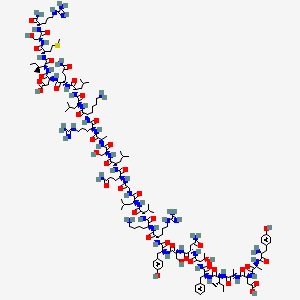
Sermorelin corresponds to the active first 29 amino acids of growth-hormone-releasing hormone. It stimulates the pituitary to release growth hormone rather than supplying growth hormone directly. Whether that produces a useful effect depends on the clinical condition and an appropriately functioning pituitary response.
Risks and limitations
Small pediatric studies cannot establish long-term adult safety. One short-stature study reported higher fasting glucose, insulin and IGF-1 during treatment, illustrating why a physiological hormone pathway is not automatically risk free.
How to read this
Linear growth in children with growth failure is different from adult body composition, recovery, sleep or longevity. The measured population and endpoint must remain attached to the claim.
Research explained
Once daily subcutaneous growth hormone-releasing hormone therapy accelerates growth in growth hormone-deficient children during the first year of therapy. Geref International Study Group.
Who was studied
110 previously untreated prepubertal children with growth-hormone deficiency entered an open-label study; 86 were eligible for efficacy analysis.
What was found
Mean annualized height velocity increased from 4.1 cm/year before treatment to 7.2 cm/year at one year.
What it cannot establish
There was no randomized placebo control, and the efficacy population was smaller than enrollment. Growth velocity is not final adult height or a healthy-adult outcome.
Read the original studyTreatment with GHRH(1-29)NH2 in children with idiopathic short stature induces a sustained increase in growth velocity.
Who was studied
18 prepubertal children with idiopathic short stature entered a one-year study; these children were not classified as growth-hormone insufficient.
What was found
Height velocity increased during treatment, then briefly fell below baseline after cessation. Fasting glucose, insulin and IGF-1 increased.
What it cannot establish
The study was small and uncontrolled. Predicted adult height was not a measured final-height outcome.
Read the original studyHistorical FDA status
Geref had separate approvals for pediatric idiopathic growth-hormone deficiency and diagnostic assessment of pituitary secretion. FDA withdrew both application approvals in 2009 at the manufacturer’s request.
Supporting sourceWithdrawal reason is a separate question
FDA determined in 2013 that the products were not withdrawn for safety or effectiveness reasons. That historical determination does not establish approval of a currently compounded product or an adult anti-aging indication.
Supporting sourceClaims versus findings
Incorrect
Historical Geref approval proves an adult anti-aging indication.
The FDA record describes pediatric growth failure and diagnostic uses, not healthy-adult longevity treatment.
Check the evidenceCommon questions
Does faster childhood growth prove a taller final adult height?
Not by itself. These reports measured growth velocity or a prediction; neither is the same as attained adult height.
SourceSources
Historical FDA status — primary or official source
Sources checked 2026-10-01.
General education; not a personal treatment plan.