

Nootropics
Semax
An ACTH-fragment-related synthetic peptide studied in neural injury and cognition models. Recent animal findings do not establish healthy-human cognitive enhancement.
Research explained · evidence varies by outcome
Also known as: ACTH analog
Practical use
Applying the explained evidence
- Where it fits
- An ACTH-fragment-related synthetic peptide studied in neural injury and cognition models. Recent animal findings do not establish healthy-human cognitive enhancement.
- Put the information into practice
- The study models below answer different questions: mouse spinal injury, a mouse Alzheimer-like model and isolated rat neural tissue. Keep the species, injury model and endpoint attached to each conclusion.
- Make the claim measurable
- Specify the claimed effect: alertness, memory, attention or another outcome. Check whether researchers measured that outcome directly; a mechanism or a subjective feeling is a different kind of evidence.
- Keep this limit in view
- Animal injury research, molecular docking and pathway analyses do not establish clinical recovery in people or justify describing Semax as a conventional opioid medicine.
Overview
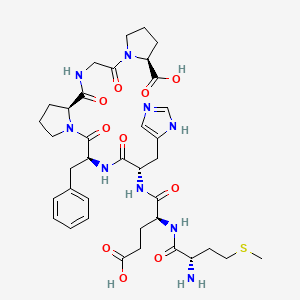
Semax is described in the cited research as a synthetic heptapeptide combining an ACTH-related fragment with a Pro-Gly-Pro sequence. Research explores neural signaling, inflammation and responses to injury. A structural relationship to ACTH does not mean that every action or indication of ACTH applies to Semax.
Risks and limitations
These experiments do not establish rates of side effects in healthy users, a human interaction profile, or the safety of online formulations. A paper’s optimistic language about future therapeutic potential is not an assessment of a commercially supplied product.
How to read this
The study models below answer different questions: mouse spinal injury, a mouse Alzheimer-like model and isolated rat neural tissue. Keep the species, injury model and endpoint attached to each conclusion.
Research explained
Spinal-cord injury experiment
Who was studied
Female mice with experimentally induced spinal injury, alongside a cell model of neuroinflammation.
What was found
Semax-associated improvements were reported in function and cellular injury measures. The authors investigated a μ-opioid-receptor/USP18-related pathway.
What it cannot establish
Animal injury research, molecular docking and pathway analyses do not establish clinical recovery in people or justify describing Semax as a conventional opioid medicine.
Read the original studyAn Alzheimer-like mouse model
Who was studied
Transgenic mice assessed with behavioral tests and brain histology; Semax and a derivative were examined.
What was found
The authors reported improved cognitive-test behavior and fewer amyloid inclusions.
What it cannot establish
This is not a clinical Alzheimer treatment trial or evidence of enhancement in healthy people. Findings for a derivative should not be merged automatically with the parent compound.
Read the original studyCalcium signaling in neural tissue
Who was studied
Rat hippocampal and cerebellar tissue preparations.
What was found
Semax increased the frequency of spontaneous calcium fluctuations in one preparation but did not significantly change the tested proton-induced response in another.
What it cannot establish
Different neural preparations responded differently. A cellular signaling change does not itself measure memory, motivation or long-term benefit.
Read the original studyA pathway result is not a complete mechanism
A study can support involvement of a pathway within its own model without proving that the pathway explains every effect of the molecule. Differences between neural regions, injury states and experimental preparations are part of the evidence, not details to remove from the summary.
Supporting sourceWhat a reader should ask about a nootropic claim
Was the outcome an actual cognitive task, a tissue marker or a computational prediction? Were participants healthy people, patients, or animals? Was Semax tested alone? Those distinctions determine how far the result can reasonably be generalized.
Common questions
Do animal memory tests prove that healthy people will think better?
No. They establish behavior in a particular animal model and motivate further research.
Should a derivative share the same entry and evidence?
Only when the relationship is explicit. A changed molecule can behave differently, so findings for derivatives need separate attribution.
Sources
Calcium signaling in neural tissue
Sources checked 2026-09-28.
General education; not a personal treatment plan.