

SARMs
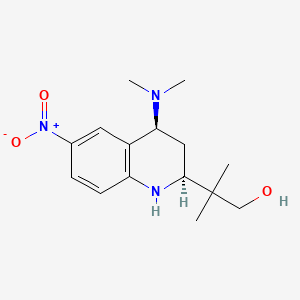
S-40503
An experimental SARM with bone-formation and strength findings in rats, without evidence here of reduced fractures or safe use in people.
Rat pharmacology and bone-formation experiments; clinical fracture benefit untested
Practical use
Evidence interpretation and clinical context
- Separate mechanism from outcome
- Direct receptor effects do not by themselves establish clinical value.
- Specify the bone measurement
- Density, formation and mechanical testing are related but distinct.
- Keep the human gap visible
- The cited paper cannot establish fracture prevention or long-term human safety.
Overview
S-40503 was designed to activate androgen receptors with greater emphasis on bone effects. Experiments examined both castrated males and ovariectomized females to study the relationship between androgen signaling, muscle and bone.
Risks and limitations
A reduced reproductive-tissue response relative to a bone response does not mean there are no reproductive effects. These animal experiments do not establish human endocrine, liver or cardiovascular safety.
How to read this
Bone can respond to mechanical loading from muscle or to direct receptor effects. The investigators used an immobilized model to explore whether the bone findings required stronger surrounding muscle.
Research explained
Bone anabolic effects of S-40503, a novel nonsteroidal selective androgen receptor modulator (SARM), in rat models of osteoporosis.
Who was studied
Castrated male rats, ovariectomized female rats and an immobilized-limb model.
What was found
S-40503 increased selected bone-density, cortical bone-formation and mechanical-strength measures. Bone effects in the immobilized setting suggested they were not explained solely by adjacent muscle activity.
What it cannot establish
This was mechanistic animal research. Laboratory bone strength is not a human fracture endpoint, and the experiments did not establish a clinical treatment window.
Read the original studyRegulatory status
FDA states that SARMs are unapproved drugs, not dietary supplements.
Supporting sourceDirect bone signaling is a hypothesis with boundaries
The immobilization result helps separate muscle loading from a possible direct bone effect. It does not demonstrate that the same mechanism produces useful fracture prevention in people.
Supporting sourceClaims versus findings
Not established
A direct bone effect makes S-40503 an established osteoporosis medicine.
The evidence here ends at animal measurements rather than patient fracture outcomes or approval.
Check the evidenceCommon questions
Why is the immobilization experiment relevant?
It tests whether bone changes can occur without the usual contribution from active surrounding muscle.
SourceSources
Regulatory status — primary or official source
Sources checked 2026-10-01.
General education; not a personal treatment plan.