

Hair and skin
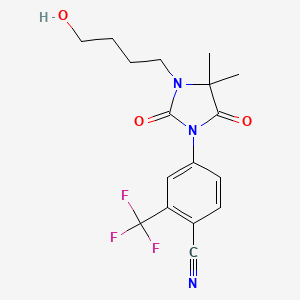
RU58841
An experimental antiandrogen with macaque and human-scalp-graft research; a human tissue graft in a mouse is not a human clinical trial.
Macaque and human-tissue xenograft studies; no human clinical outcome trial in these sources
Also known as: PSK-3841
Practical use
Evidence interpretation and clinical context
- Identify the host
- Read beyond the tissue source to determine which organism actually received the intervention.
- Separate receptor blockade from benefit
- Blocking a receptor is a mechanism, not a complete clinical outcome.
- Check for actual approval evidence
- An experimental name on a product listing is not a regulatory record.
Overview
RU58841 blocks androgen-receptor activity. Its best-known published hair studies involve macaques and scalp tissue transplanted into immunodeficient mice. These models can test biology but do not establish a licensed hair-loss treatment.
Risks and limitations
The cited experiments cannot establish cardiovascular, reproductive or long-term endocrine safety in people. Observing few systemic effects in a controlled animal experiment does not make an unverified topical product safe.
How to read this
The phrase human scalp can obscure the experimental unit. When scalp tissue is grafted onto a mouse, the drug’s exposure and host physiology remain part of an animal experiment.
Research explained
Evaluation of RU58841 as an anti-androgen in prostate PC3 cells and a topical anti-alopecia agent in the bald scalp of stumptailed macaques.
Who was studied
Receptor and cell experiments plus a topical hair-growth study in macaques.
What was found
Researchers observed androgen-receptor antagonism and increases in hair density, thickness and length in the animal work.
What it cannot establish
The animal observations do not establish long-term human safety or superiority to licensed treatments.
Read the original studyA controlled study of the effects of RU58841, a non-steroidal antiandrogen, on human hair production by balding scalp grafts maintained on testosterone-conditioned nude mice.
Who was studied
Human scalp grafts maintained on immunodeficient mice, with treated and control grafts followed for hair growth.
What was found
The treated grafts showed more follicles entering a subsequent growth cycle and a higher growth rate than controls.
What it cannot establish
The recipients were mice. Human donor tissue does not turn this into a randomized trial in people; the sample was also small.
Read the original studyThe current evidence boundary
The cited publications support experimental antiandrogen and hair-biology research. They do not document marketing approval or a validated human benefit-risk assessment.
Supporting sourceA model can preserve tissue biology without reproducing a patient
Scalp grafts allow investigators to examine living human follicles in a controlled host. They do not reproduce whole-person drug metabolism, long-term exposure or clinical outcomes.
Supporting sourceClaims versus findings
Misleading study description
Human-scalp research proves clinical effectiveness in humans.
The scalp tissue was transplanted into mice; the study was a xenograft experiment.
Check the evidenceCommon questions
Can the animal study quantify systemic risk in people?
No. Its exposure conditions and species limit that inference.
SourceSources
Sources checked 2026-10-01.
General education; not a personal treatment plan.