

Peptides
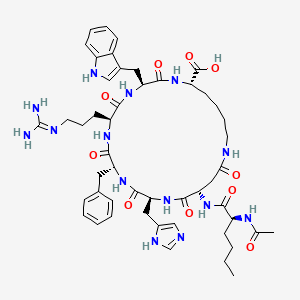
PT-141 (Bremelanotide)
Bremelanotide has trial evidence for distressing low sexual desire in a defined premenopausal population, with substantial nausea and cardiovascular restrictions.
Two randomized HSDD trials; population- and endpoint-specific effects
Also known as: Bremelanotide · Vyleesi
Practical use
Clinical context and evidence interpretation
- Describe the actual concern
- Separate desire, arousal, pain, erection difficulties and distress before comparing evidence.
- Bring relevant context
- Record when the problem began, whether it varies by situation, and any medication changes for the clinical discussion.
- Ask for the meaningful threshold
- Ask what amount of symptom improvement would justify continued treatment given nausea, blood-pressure effects and other burdens.
Overview
PT-141 is bremelanotide, a melanocortin receptor agonist. US Vyleesi is approved for acquired, generalized hypoactive sexual desire disorder (HSDD) in premenopausal women when low desire is not explained by another condition, medication or relationship problem. It is not approved as a general sexual-performance enhancer.
Risks and limitations
Vyleesi is contraindicated in uncontrolled hypertension or known cardiovascular disease. It transiently raises blood pressure and can reduce heart rate. Nausea occurred in 40% in labeled trials; flushing, headache and persistent pigmentation changes also matter. It can reduce oral naltrexone exposure, so interactions require review.
How to read this
Sexual desire, distress, erections and the number of satisfying sexual events are distinct outcomes. A positive finding for one should not be presented as a proven improvement in all of them.
Research explained
RECONNECT phase III trials
Who was studied
1,267 premenopausal women with HSDD randomized across two double-blind trials to bremelanotide or placebo for 24 weeks; 1,202 were in the efficacy analysis. Most participants were White and recruited in the US.
What was found
The combined placebo-adjusted improvement was 0.35 points in the desire-domain score and a 0.33-point reduction in distress about low desire. The number of satisfying sexual events did not significantly differ between groups. Nausea, flushing and headache were more common with bremelanotide.
What it cannot establish
Scale-point differences are not percentages or a promise of individual response. The trials do not establish effectiveness for men, postmenopausal women or healthy-user performance enhancement.
Read the original studyIdentify what changed
The trials found improvement in desire and associated distress while the satisfying-event count did not significantly improve. Keeping both results avoids turning a mixed outcome profile into a universal libido claim.
Supporting sourceA low desire complaint has context
The approved indication requires assessment of other explanations for low desire. The product label cannot be reduced to a claim that all sexual symptoms respond to one receptor mechanism.
Supporting sourceClaims versus findings
Incorrect
FDA approval proves PT-141 improves sexual performance in everyone.
The indication and trial population are specific, and the satisfying-event endpoint did not show a significant difference.
Check the evidenceCommon questions
Does this replace assessment of medication or relationship factors?
No. Those factors are part of deciding whether the labeled disorder and treatment context apply.
SourceSources
US prescribing information; checked October 1, 2026
Sources checked 2026-10-01.
General education; not a personal treatment plan.