

Peptides
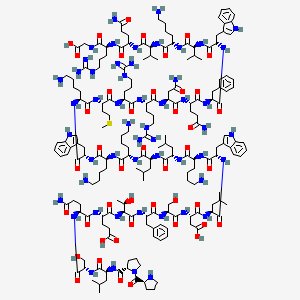
PNC-27
An engineered anticancer research peptide studied in cell systems; selective cell killing is not established cancer treatment in people.
Mechanistic and cancer-cell experiments
Practical use
Reviewed practical notes
- Keep the model visible
- Cell lines are not treated cancer patients.
- Do not equate selectivity with safety
- One normal-cell control does not represent all organs.
- Keep care evidence based
- These experiments do not justify delaying or replacing established cancer treatment.
Overview
PNC-27 combines a p53-derived binding region with a cell-penetrating component. Investigators have examined its interaction with membrane-associated HDM-2 and the formation of pores in cancer-cell membranes. These are mechanistic experiments, not evidence of improved survival in cancer patients.
Risks and limitations
Killing a cancer cell line while sparing a selected control cell line cannot establish whole-body safety. The reviewed studies do not settle distribution, immune effects, organ toxicity or a clinical therapeutic window. They also do not authenticate products sold under the PNC-27 name.
How to read this
Cancer type and experimental model matter. A finding in pancreatic or cervical cancer cells cannot be generalized to every tumor. The evidence does not support substituting this research peptide for an established oncology treatment.
Research explained
Membrane-pore mechanism
Who was studied
Cancer-cell and untransformed fibroblast cultures examined with structural modeling and immuno-electron microscopy.
What was found
The authors observed peptide–HDM-2 complexes associated with membrane pores in the studied cancer cells, with no pores in the fibroblast control.
What it cannot establish
The proposed pore structure combines experimental observations with modeling. It does not establish tumor selectivity or safety throughout a person’s body.
Read the original studyPancreatic cancer-cell experiment
Who was studied
A pancreatic cancer cell line examined with HDM-2 antibody-blocking and cellular assays.
What was found
The study supported involvement of membrane-associated HDM-2 and described membrane and mitochondrial disruption.
What it cannot establish
This was not a clinical pancreatic-cancer trial and did not measure patient survival.
Read the original studyCervical cancer-cell comparison
Who was studied
A cervical cancer cell line compared with a normal cervical cell preparation in vitro.
What was found
Researchers reported greater cytotoxic activity against the cancer-cell model under the tested conditions.
What it cannot establish
A selected normal-cell comparison cannot establish absence of toxicity to other tissues or effectiveness in patients.
Read the original studyCell selectivity requires clinical confirmation
A useful laboratory signal must still survive testing in a whole organism and then appropriately designed human studies. Neither a mechanistic target nor cell death alone is a demonstrated cancer therapy.
Supporting sourceSources
2022 structural and cell-mechanism experiment
Sources checked 2026-10-01.
General education; not a personal treatment plan.