

Peptides
Pinealon
A short research peptide with cell experiments and a weakly reported human aging study, without established clinical anti-aging benefit.
Cell research; limited and unclear human report
Also known as: Glu-Asp-Arg
Practical use
Reviewed practical notes
- Check the design
- A favorable conclusion is less informative when allocation and comparator are unclear.
- Retain reporting problems
- Do not repair an inconsistent sample count by guessing.
- Separate markers from health
- Changes in biological-age indicators are not demonstrated longevity benefits.
Overview
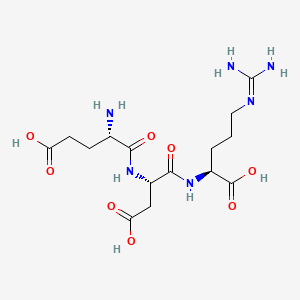
Pinealon is the tripeptide Glu-Asp-Arg. Researchers have studied cellular responses to oxidative stress and proposed neurological or aging-related effects. Reduced cell death under an experimental stressor is a much narrower finding than preserved cognition or slower aging in people.
Risks and limitations
The small human report includes pro-oxidant findings and changes in circulating CD34-positive cells, as well as favorable interpretations by its authors. These observations need clarification. An unchanged chromatin marker cannot establish genetic safety or exclude clinically important harms.
How to read this
The human abstract discusses both Pinealon and Vesugen and provides insufficient allocation and comparator details to isolate a reliable Pinealon effect. Its broad anti-aging conclusions go beyond what can be established from the reported methods and surrogate markers.
Research explained
Cellular oxidative-stress experiments
Who was studied
Cultured cerebellar neurons, neutrophils and a neuronal-like cell line.
What was found
Pinealon altered oxidative-stress responses, cell-survival measures and signaling under laboratory conditions.
What it cannot establish
These experiments did not test memory, disability, disease prevention or survival in treated patients.
Read the original studySmall report in adults with multiple chronic conditions
Who was studied
A Russian-language clinical report involving Pinealon and Vesugen; the abstract gives inconsistent participant totals.
What was found
The authors described changes in biological-age indicators and other laboratory measures, including pro-oxidant activity and reduced CD34-positive cells.
What it cannot establish
Randomization, comparator and separate compound attribution are unclear in the accessible abstract. Its stated total is 32, but the listed sex counts sum to 30; no corrected denominator is assumed.
Read the original studyAging markers do not establish slower aging
A biomarker study needs a credible comparison and a clear connection to outcomes that matter. This report does not establish that Pinealon prolongs life, prevents cognitive decline or provides a well-characterized clinical benefit.
Supporting sourceSources
2011 cellular stress-response study
2015 human report and reporting limitations
Sources checked 2026-10-01.
General education; not a personal treatment plan.