

Nootropics
Oxiracetam
A racetam whose larger recent post-stroke trial found no significant cognitive advantage over placebo.
Recent randomized trial with null main outcomes
Practical use
Reviewed practical notes
- Start with the newer main outcomes
- Preserve the MMSE and CDR findings when summarizing the recent study.
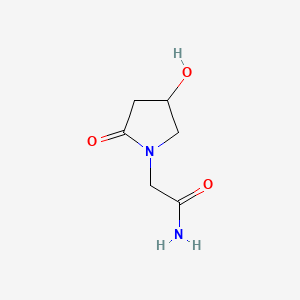
- Check the chemical identity
- A study of a specific isomer is not automatically a study of the same oxiracetam preparation.
- Avoid subgroup promotion
- Exploratory findings should generate questions rather than erase negative main results.
Overview
Oxiracetam has been investigated for cognitive impairment. The practical question is whether a controlled trial shows a meaningful advantage for the population and outcome of interest, not whether older reports use favorable nootropic language.
Risks and limitations
A report of good tolerability in a short, small trial does not establish long-term safety or a useful benefit–risk balance. The cited trials are not evidence for combining racetams or treating cognitive symptoms without a diagnosis.
How to read this
The newer post-stroke trial should remain visible alongside older findings. Null results for its main cognitive measures cannot be turned into success by selecting exploratory imaging or physical-activity subgroups.
Research explained
Post-stroke cognitive decline trial
Who was studied
500 participants enrolled after stroke, with cognitive complaints and elevated risk; randomized double-blind placebo comparison over 36 weeks. 457 completed.
What was found
Mean MMSE change was +0.13 with oxiracetam versus +0.27 with placebo (p=0.49). CDR–Sum of Boxes changes also did not differ significantly (p=0.38).
What it cannot establish
Specific post-stroke population and follow-up; this is not proof of zero effect in every setting. It does not support the claimed cognitive benefit in the studied setting.
Read the original studyEarlier late-life brain-syndrome trial
Who was studied
40 patients with late-life organic brain syndrome; randomized double-blind placebo comparison for four weeks.
What was found
Some symptoms improved within the oxiracetam group. Between-group differences on the detailed geriatric assessment scale did not reach significance, although an overall improvement trend favored treatment.
What it cannot establish
Small and short, using an older diagnostic category. The PubMed abstract is truncated; within-group improvement should not be described as a clear placebo-controlled success.
Read the original studyCompare groups, not just before and after
Practice, time and other care can change test scores. The treatment question is whether the active group improved more than its comparator. Both groups can improve while the experiment still fails to show added benefit.
Supporting sourceSources
2026 post-stroke randomized trial
Sources checked 2026-10-01.
General education; not a personal treatment plan.