

Androgens
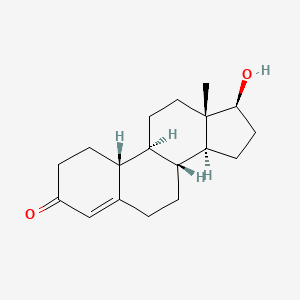
Nandrolone
An anabolic androgen with clinical research in wasting disorders; those results are population-specific.
Human research / population-specific
Also known as: nandrolone decanoate · Deca · NPP
Practical use
Applying the explained evidence
- Where it fits
- An anabolic androgen with clinical research in wasting disorders; those results are population-specific.
- Put the information into practice
- Fat-free mass includes more than contractile muscle. The disease context, comparator, study duration and measurement method all affect what a reported gain means.
- Formulation and purpose
- Write down the exact compound and formulation behind a claim. Compare the studied population and purpose with the situation being discussed; evidence for medical replacement does not automatically answer a physique-enhancement question.
- Keep this limit in view
- In the six-month dialysis trial, lean mass increased and the walking/stair test improved, but grip strength did not change and the oxygen-consumption result was not significant.
Overview
Nandrolone is an anabolic androgen; decanoate and phenylpropionate are ester formulations that alter delivery. Research in HIV-associated wasting, dialysis and glucocorticoid-treated patients addresses different clinical problems from physique enhancement in healthy trainees. Read the formulation and population before carrying a result into another setting.
Risks and limitations
The archived decanoate label describes liver injury, adverse lipid changes, fluid retention and reproductive effects. It warns of potentially irreversible virilization in women. Serious abdominal symptoms, jaundice, unusual swelling or breathing problems warrant medical assessment. Absence of symptoms does not establish absence of harm.
How to read this
Fat-free mass includes more than contractile muscle. The disease context, comparator, study duration and measurement method all affect what a reported gain means.
Research explained
Randomized HIV-wasting trial
Who was studied
303 adult men with HIV and defined weight loss or low body-composition measures; 12 weeks.
- Fat-free mass: difference vs placebo
- 1.34 kg
- Body weight: difference vs placebo
- 1.48 kg
What was found
The placebo-adjusted fat-free-mass difference was 1.34 kg (95% CI 0.60–2.08); the weight difference was 1.48 kg (0.82–2.14). Against testosterone, the fat-free-mass difference was 0.69 kg (−0.13 to 1.51), which was not statistically significant.
What it cannot establish
A wasting-disorder study cannot predict gains or establish a safe regimen in healthy athletes. The result does not prove superiority across populations or outcomes.
Read the original studyDialysis: lean mass and functional outcomes
Who was studied
29 dialysis patients, randomized to nandrolone or placebo for six months.
What was found
Lean body mass increased 4.5 ± 2.3 kg in the active group and 1.9 ± 1.6 kg with placebo; the between-group comparison was significant (P=0.005). Walking/stair-test time improved from 36.5 to 32.7 seconds with nandrolone and worsened from 38.7 to 42.1 seconds with placebo. Grip strength did not change; peak oxygen-consumption improvement was not significant.
What it cannot establish
A small trial in dialysis-associated wasting cannot forecast gains in healthy athletes. Body composition, grip strength and aerobic fitness did not move uniformly.
Read the original studyDialysis: separating exercise from the drug
Who was studied
79 maintenance-hemodialysis patients randomized in a two-by-two design separating nandrolone/placebo from resistance exercise/no exercise; 12 weeks, 68 completers.
What was found
The nandrolone groups gained 3.1 ± 2.2 kg lean mass. Exercise and nandrolone both increased quadriceps cross-sectional area, with additive effects. Training improved strength in the trained tasks and self-reported physical functioning.
What it cannot establish
A larger measured muscle compartment is not equivalent to improved survival. This design separates some training effects, but its medically frail population still limits transfer to physique sport.
Read the original studyLong-term glucocorticoid treatment
Who was studied
51 men on systemic glucocorticoids, randomized to testosterone, nandrolone or placebo for twelve months.
What was found
Muscle-mass changes from baseline were +3.5%, +5.8% and −0.9%, respectively (overall P<0.0001); both androgen groups improved measured strength. Hip and total-body bone-density changes were not significant.
What it cannot establish
The group means do not establish nandrolone superiority on every endpoint. Concurrent glucocorticoid exposure and its muscle/bone effects are central to interpreting this population.
Read the original studyWhat the comparator actually tells us
This trial supports a short-term body-composition effect in HIV-associated wasting. The confidence interval for the comparison with testosterone crosses zero, so it does not establish a reliable fat-free-mass advantage over that comparator. Statistical evidence for one comparison does not automatically transfer to another.
Supporting sourceLiver, lipid and bleeding concerns
The archived label warns of peliosis hepatis, liver tumors and adverse lipid changes with androgenic anabolic steroids. These are warnings, not quantified incidence estimates for a particular cycle. The label is historical safety evidence, not confirmation that a brand is currently marketed.
Supporting sourceMechanism: why tissue metabolism matters
Primary receptor experiments in rat tissues showed that 5-alpha reduction changes testosterone and nandrolone differently. Testosterone forms DHT, while nandrolone forms dihydronandrolone; their receptor binding and tissue retention differ. This helps explain tissue-dependent actions. It does not provide a validated numerical anabolic-to-androgenic ratio for a human user or prove that skin, prostate or reproductive effects are absent.
Supporting sourcePharmacokinetics: depot release versus elimination
A human pharmacokinetic experiment estimated an approximately six-day half-life for ester release from the muscular depot, versus roughly 4.3 hours for the combined downstream processes of hydrolysis, distribution and elimination. These describe different stages, not contradictory values. The depot governs continued delivery after administration; the shorter number cannot be used to infer that exposure ends within a day. Different esters, preparations and methods of measurement need their own data.
Supporting sourceInteractions that deserve attention
The archived label identifies enhanced effects of oral anticoagulants and greater edema risk with adrenal steroids or ACTH. It also describes altered glucose tolerance. Medication review is therefore part of clinical use; this is not a list of drugs to add for managing adverse effects.
Supporting sourceWhat a lean-mass number does and does not mean
The dialysis exercise trial measured lean mass by DXA and quadriceps area by MRI. Those outcomes assess different anatomical compartments. Training-specific strength changes were separately measured. When reading a headline result, ask whether it is within-group change, a difference against placebo, or a comparison against another active medicine. Those quantities are not interchangeable.
Supporting sourceClaims versus findings
Not supported as a general rule
More lean mass means all performance measures improve.
In the six-month dialysis trial, lean mass increased and the walking/stair test improved, but grip strength did not change and the oxygen-consumption result was not significant.
Check the evidenceCommon questions
Is Deca the same formulation as NPP?
Both names refer to nandrolone ester preparations, but this entry’s clinical outcome trials mainly concern decanoate. A result for one ester or delivery system should not be silently assigned to the other.
SourceCan the published gains predict my result?
No. These trials involve defined disease settings, treatment periods and comparators. A reported group average does not determine an individual result, retained gains after discontinuation or the effects of combining compounds.
SourceSources
Archived nandrolone decanoate label
Dialysis: lean mass and functional outcomes
Dialysis: separating exercise from the drug
Long-term glucocorticoid treatment
Mechanism: why tissue metabolism matters
Pharmacokinetics: depot release versus elimination
Sources checked 2026-09-28.
General education; not a personal treatment plan.